💧WaterWater regularly during spring vegetative and bulbing phases; withdraw irrigation completely 2-3 weeks before harvest to prevent bulb skin staining and rot.
💧WaterMaintain constant, even moisture throughout the active vegetative cycle; decrease watering sharply as foliage begins autumn senescence.
🗺️Zone9a-12b
Moderate✨ fragrant_foliage
📏 Height: 3-4 feet (90-120 cm)
Ideal pH5.5 – 6.8
herb_non_graminoidNE
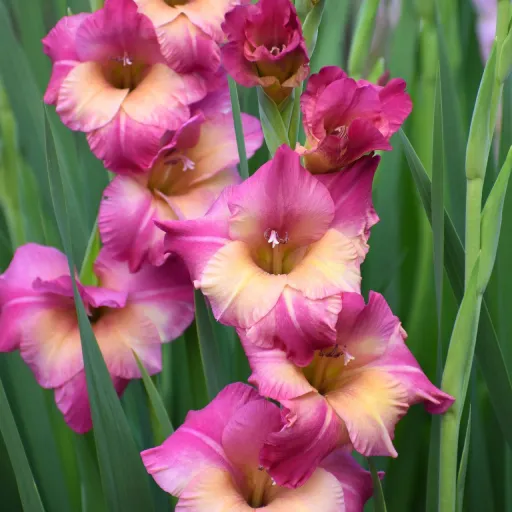
Gladiolus, Sword Lily, Garden Glad
Gladiolus hortulanus
Iridaceae
☀️SunFull Sun
💧WaterMaintain 1 inch of water per week during active growth; avoid overhead watering to prevent botrytis.
🗺️Zone7a-10b
Moderate⚠️ Mildly Toxic✨ deer_resistant
📏 Height: 2-5 feet (60-150 cm)
Ideal pH6 – 7
herb_non_graminoidLC
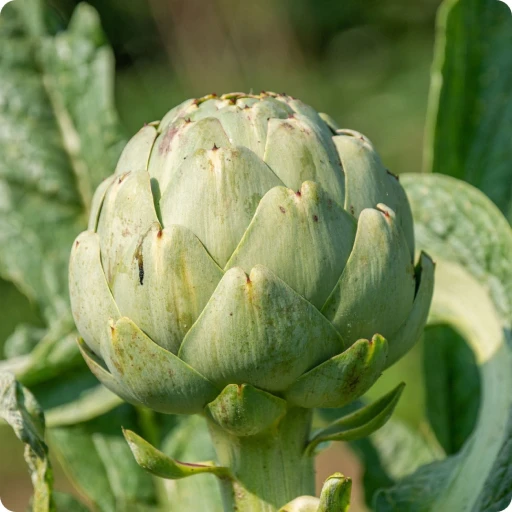
Globe Artichoke, French Artichoke, Green Artichoke
Cynara cardunculus
Asteraceae
☀️SunFull Sun
💧WaterIrrigate deeply every 7-10 days during bud formation; reduce water after main summer harvest.
🗺️Zone7a-11b
Moderate✨ fragrant_flower
📏 Height: 3-5 feet (90-150 cm)
Ideal pH6.5 – 7.5
herb_non_graminoidNE
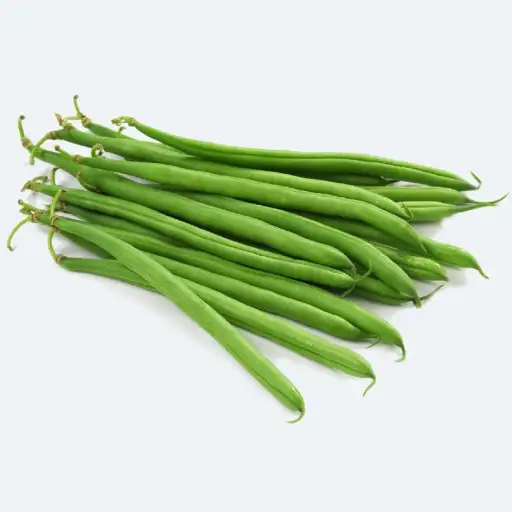
Green bean, French bean, String bean, Snap bean, Common bean, Haricot bean
Phaseolus vulgaris
Fabaceae
☀️SunFull Sun
💧WaterProvide about 1 inch / 2.5 cm of water per week. Maintain even moisture during flowering and pod development. Drip irrigation is preferred to reduce foliar disease.
🗺️Zone2-11 (grown as frost-free annual)
Easy⚠️ Mildly Toxic✨ fragrant_flower
📏 Height: 1-2 ft (bush types), 6-10 ft (pole types)
Ideal pH6 – 7
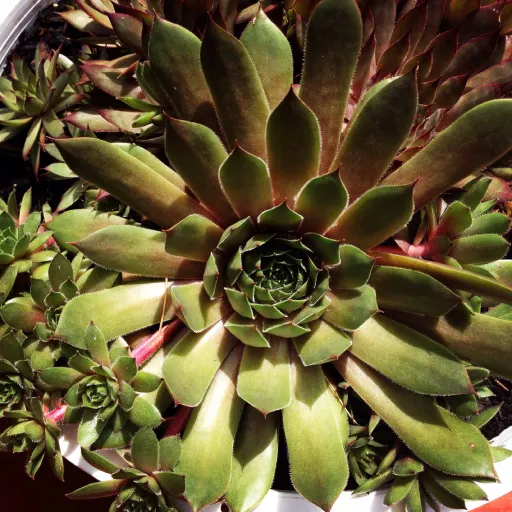
succulent_leafLC
Common Houseleek, Hens and Chicks, Roof Houseleek
Sempervivum tectorum
Crassulaceae
☀️SunFull Sun, Partial Sun
💧WaterIrrigate thoroughly on establishment; once established, natural rainfall is sufficient. Container plants require watering only when substrate is completely dry.
🗺️Zone3a-8b
Easy✨ deer_resistant
📏 Height: 3-6 inches (7-15 cm) (foliage); up to 12 inches (30 cm) when flowering
Ideal pH6 – 7.8
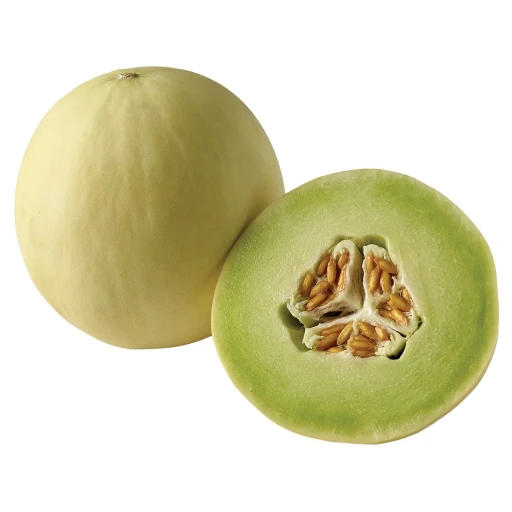
climberNE
Honeydew Melon, White Antibes Melon
Cucumis melo
Cucurbitaceae
☀️SunFull Sun
💧WaterWater regularly and evenly until fruits reach full size, then taper watering off during the final 1-2 weeks before harvest to concentrate sugars and prevent rind splitting.
🗺️Zone4a-11b
Moderate✨ Attracts Pollinators
📏 Height: 1-1.5 feet (30-45 cm)
Ideal pH6.2 – 7
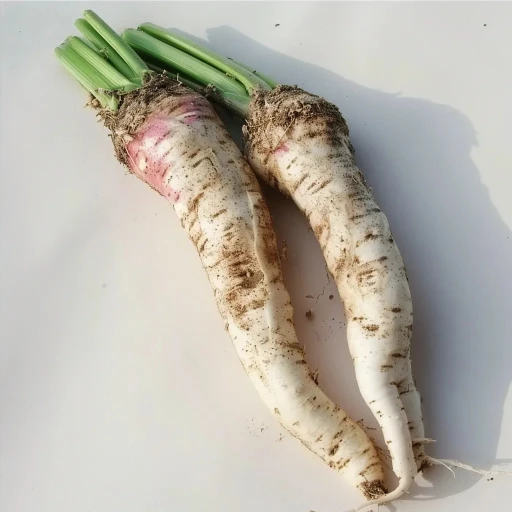
herb_non_graminoidLC
Horseradish, German Mustard, Red Cole
Armoracia rusticana
Brassicaceae
☀️SunFull Sun, Partial Sun
💧WaterMaintain even moisture during summer root enlargement; drought stresses roots, resulting in woody fibrous textures.
🗺️Zone3a-9b
Easy⚠️ Mildly Toxic✨ deer_resistant
📏 Height: 2-3.5 feet (60-105 cm)
Ideal pH6 – 7.5
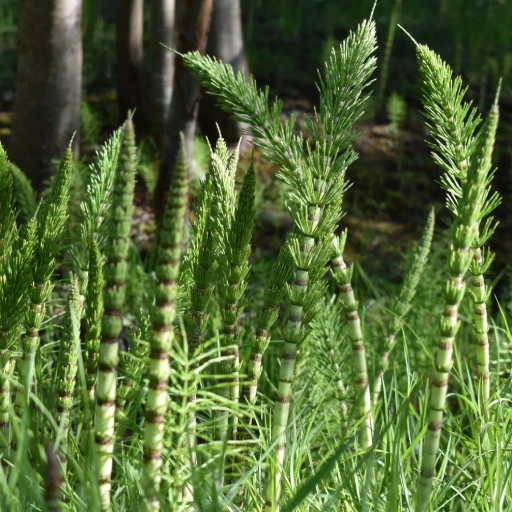
fern_allyLC
Rough Horsetail, Scouring Rush, Dutch Rush, Common Horsetail
Equisetum hyemale
Equisetaceae
☀️SunFull Sun, Partial Sun, Partial Shade
💧WaterKeep soil constantly wet or damp; tolerates submersion up to 4 inches (10 cm) of standing water.
🗺️Zone3a-11b
Easy⚠️ Mildly Toxic✨ deer_resistant
📏 Height: 2-5 feet (60-150 cm)
Ideal pH6 – 8
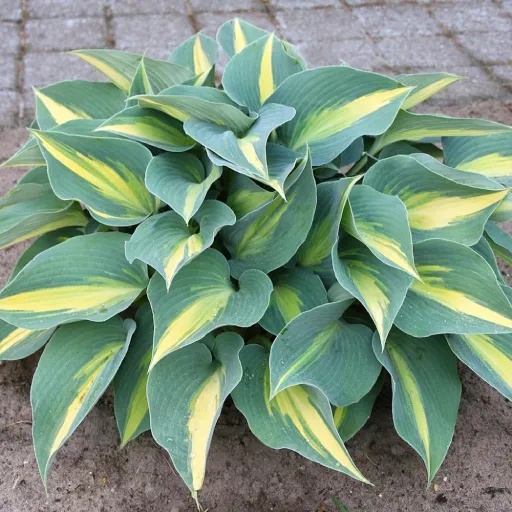
herb_non_graminoidLC
Hosta, Plantain Lily, Funkia, Gibōshi (Japan)
Hosta spp.
Asparagaceae
☀️SunPartial Sun, Partial Shade, Full Shade
💧Water1 inch of water weekly; keep soil consistently moist, especially for blue-foliaged cultivars to prevent leaf scorch and drought dormancy.
🗺️Zone3a - 9b
Easy⚠️ Mildly Toxic✨ fragrant_flower
📏 Height: 1-3 feet
Ideal pH6 – 7
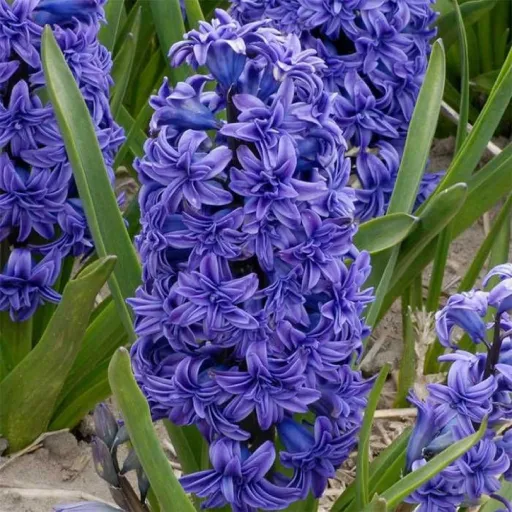
herb_non_graminoidLC
Garden Hyacinth, Dutch Hyacinth, Common Hyacinth
Hyacinthus orientalis
Asparagaceae
☀️SunFull Sun, Partial Sun
💧WaterKeep evenly moist during rooting and spring growth; keep relatively dry during summer dormancy to avoid bulb rot.
🗺️Zone4a-8b
Easy⚠️ Highly Toxic✨ fragrant_flower
📏 Height: 8-12 inches (20-30 cm)
Ideal pH6 – 7.5
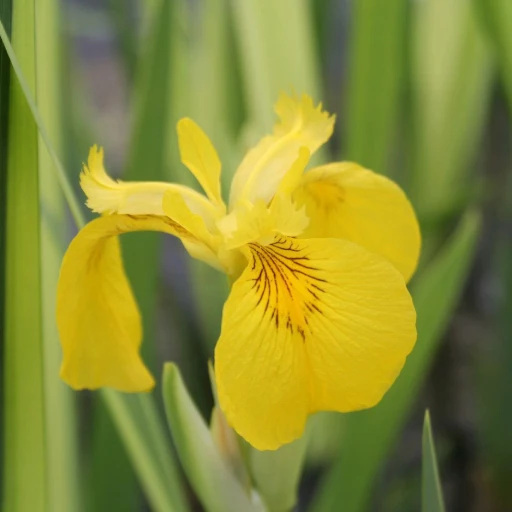
herb_non_graminoidLC
Yellow Flag Iris, Water Flag, Yellow Iris, False Acorus
Iris pseudacorus
Iridaceae
☀️SunFull Sun, Partial Sun
💧WaterGrows in wet boggy soil or in standing water up to 25 cm deep; tolerates periods of seasonal soil drying once established.
🗺️Zone4a-9b
Easy⚠️ Highly Toxic✨ deer_resistant
📏 Height: 3-5 feet (90-150 cm)
Ideal pH6 – 7.5
Beans: Soil pH, Planting Depth and Spacing (Green, Bush, Fava)
The three bean records in this database, green bean, bush bean and fava (broad bean), all sit in the same narrow soil window: pH 6.0 to 7.0, well-drained, and neither waterlogged nor droughted through pod fill. That window is not a preference, it is a biological constraint. Rhizobium nodules (the reason a bean feeds itself) stop fixing atmospheric nitrogen below about pH 6.0, and fava shows aluminium and manganese toxicity on acid ground before the common beans do. Lime to 6.0-6.5 if a test comes back under 6.0, then re-test: the correction takes months, not weeks.
Depth. Sow bean seed at about three times its own thickness and no deeper: 1 to 1.5 inches for green and bush bean, 1 to 2 inches for the larger fava seed. Sowing shallow is the safer error. Common bean will not germinate in soil still below 60°F (16°C) (seed sits and rots instead of swelling) while fava is the opposite and goes in four to six weeks before the last frost, which is why it also works as an autumn sowing. Neither wants a presoak: hydrate the bed, not the seed.
Spacing. Bush types are determinate and stop growing on their own, so 3 to 4 inches within the row and 18 to 24 inches between rows gives a canopy that closes without crowding; thinned stands dry out and crack their pods. Fava is taller and stiffer, so it takes 4 to 6 inches in the row with 24 inches between rows, and it benefits from a stake on exposed ground. Pole types are a different question: they need the trellis before the seed goes in.
After sowing. About an inch of water a week, held evenly through flowering and pod set: a dry week at first bloom drops the flower set, and a waterlogged week at harvest splits the pods. Inoculate seed if the bed has not grown a legume in the last four years, keep fresh manure out of the hole (it delays nodulation) and feed phosphorus and potash from a soil test rather than by habit. Full sun for all three. For the pH side of that, start from the soil pH by crop reference table and work out the rate with the lime requirement calculator.