Precision Soil Math.
Zero Black Boxes.
Stop guessing with generic lookup charts. SoilTune provides free, precision soil calculators built on peer-reviewed USDA-NRCS and land-grant university extension models, giving you the exact lime, sulfur, gypsum, or fertilizer blend your soil requires, with full mathematical transparency and zero affiliate upsells.
Fresh Soil Science & Guides
Expert guides, product comparisons, and troubleshooting tips for healthier soil.
 Soil Testing
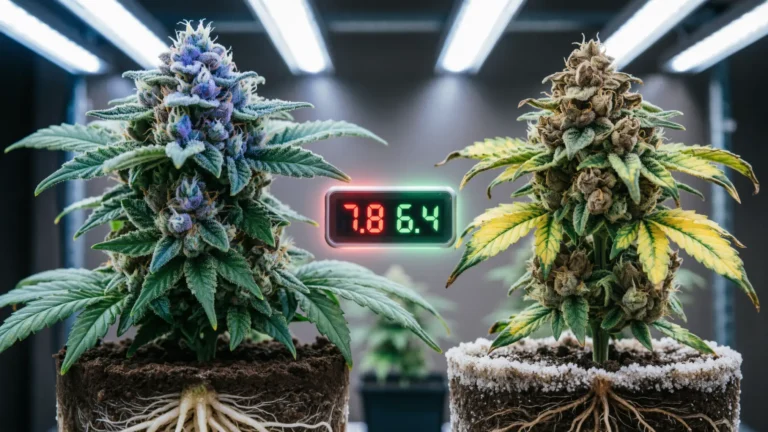
Cannabis pH & Nutrient Lockout: The Complete Grower’s Guide
Master growing weed ph: soil 6.2–6.8, soilless 5.8–6.2. Diagnose lockout with our runoff pH/EC matrix and fix it with the 3-step flush...
 Soil Acidification
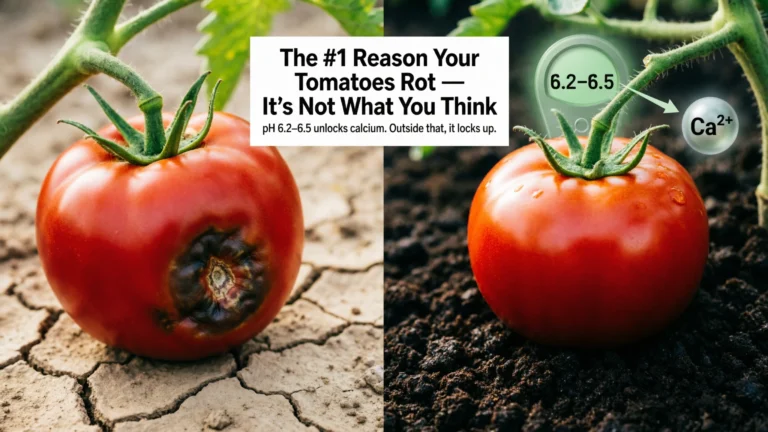
What Should the Soil pH Be for Tomatoes, Peppers & Potatoes?
Ideal soil pH for tomatoes is 6.0-6.8 (best 6.2-6.5). Get exact ranges for peppers, potatoes & onions plus a sulfur amendment calculator....
 Soil Acidification
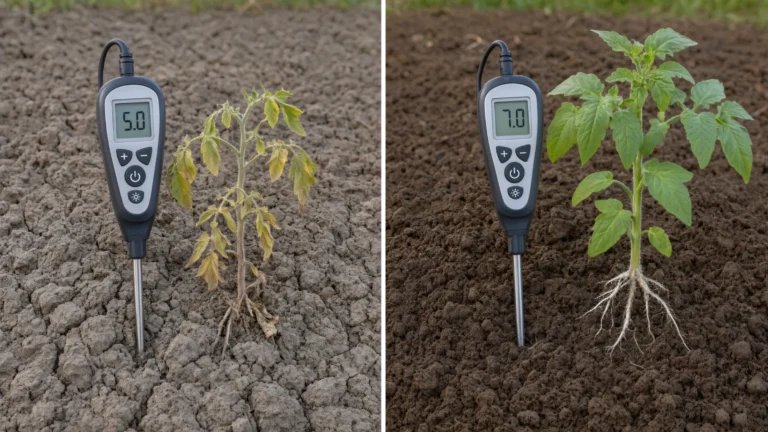
How to Raise Soil pH: The Science of Lime, CEC, & Busting Baking Soda Myths
Learn how to raise soil pH with agricultural lime, CEC calculations & buffer pH tests and why baking soda destroys soil. Free...
 Soil Acidification
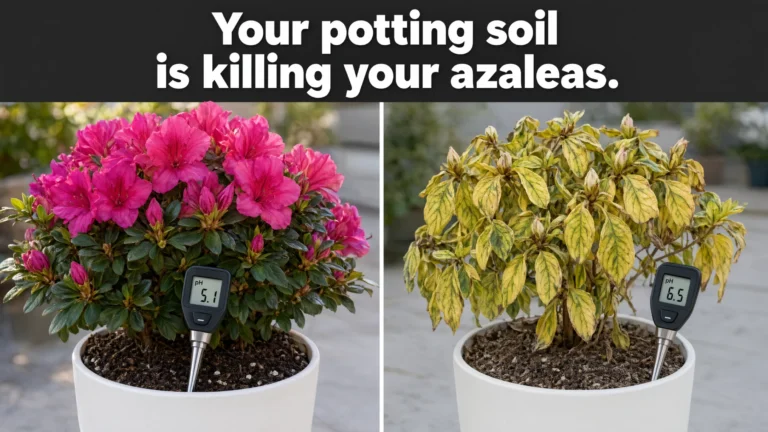
The Ultimate Azalea Potting Soil Mix: DIY Recipe & Container Guide
Get the exact azalea potting soil mix recipe: 40% pine bark, 30% peat moss, 20% perlite. Keep pH 4.5–5.5 with our 12-month...
 Soil Acidification
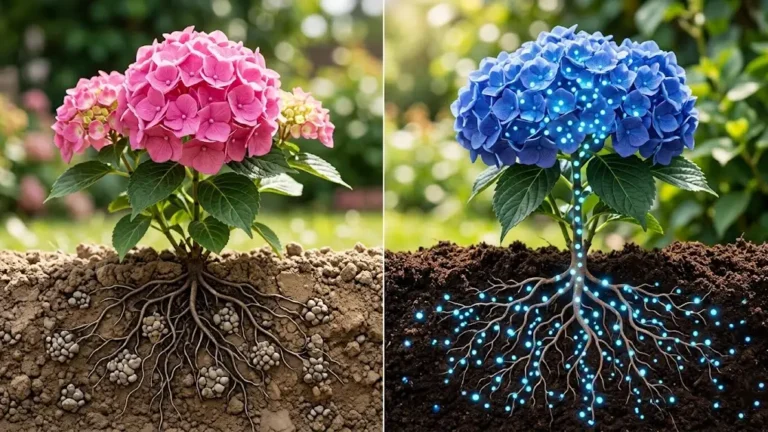
How to Change Hydrangea Color: The Complete pH + Aluminum Protocol for Blue or Pink Blooms
Change hydrangea color with science: aluminum sulfate doses by pH band for blue, dolomitic lime for pink, plus the phosphorus trap fix...
 Lawn Care
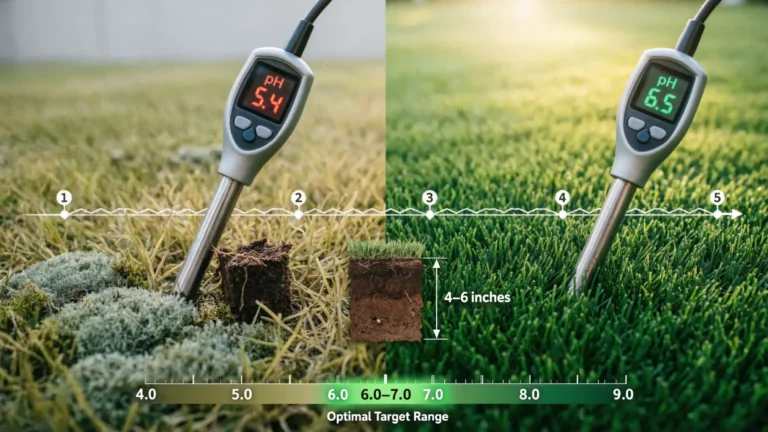
Lawn Soil pH Test Kit: Complete Testing & Correction Guide
Learn how to test lawn soil pH with our step-by-step guide. Compare test kits, diagnose turfgrass problems & get exact sulfur/lime rates...
Most Popular Guides
The most read articles by our community of growers and agronomists.
 Soil Testing
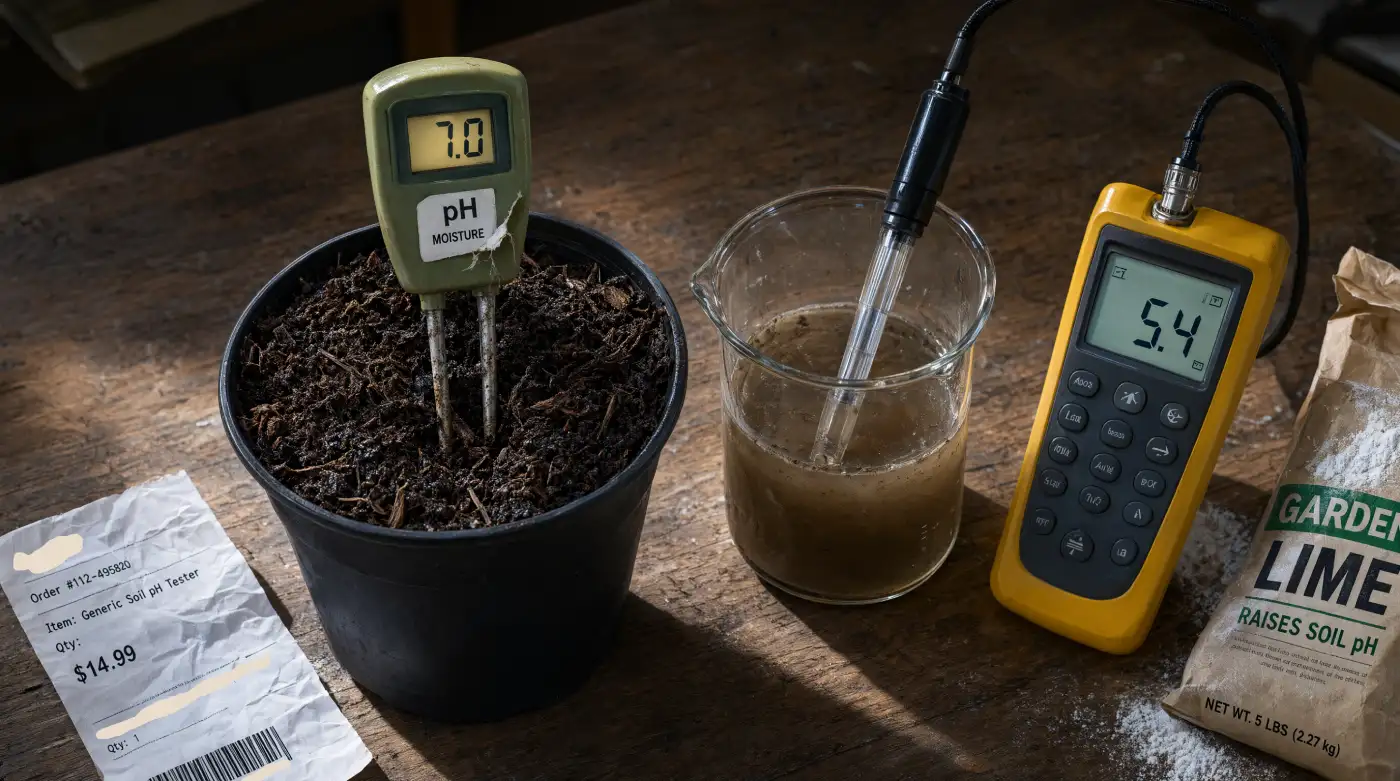
Borkut Soil pH Meter Review: Is This Budget Probe Actually Accurate? (2026 Lab Test)
We tested the Borkut soil pH meter against lab equipment on 3 real soils. See if this budget probe is accurate or...
 Lawn Care
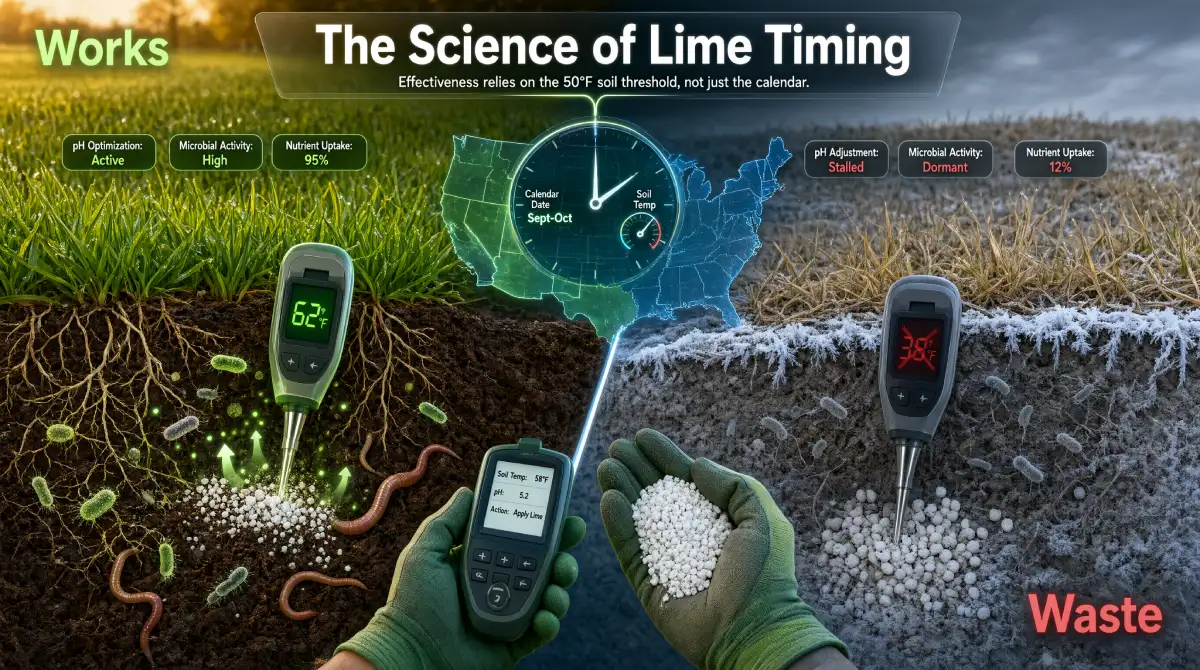
The Best Time for Lime on Lawn: A Soil-Temperature Guide
Discover the best time for lime on lawn and when to use lime in the garden. Our USDA zone guide reveals the...
 Soil Acidification
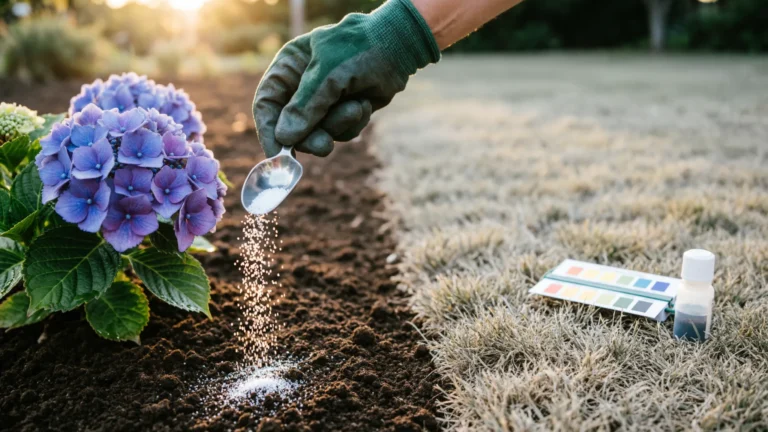
How to Use Aluminum Sulfate to Lower Soil pH (Safely & Quickly)
Aluminum sulfate for soil pH works in days, not months. Get exact dosages, toxicity thresholds, and a speed-vs-safety matrix before you apply.
 Lawn Care
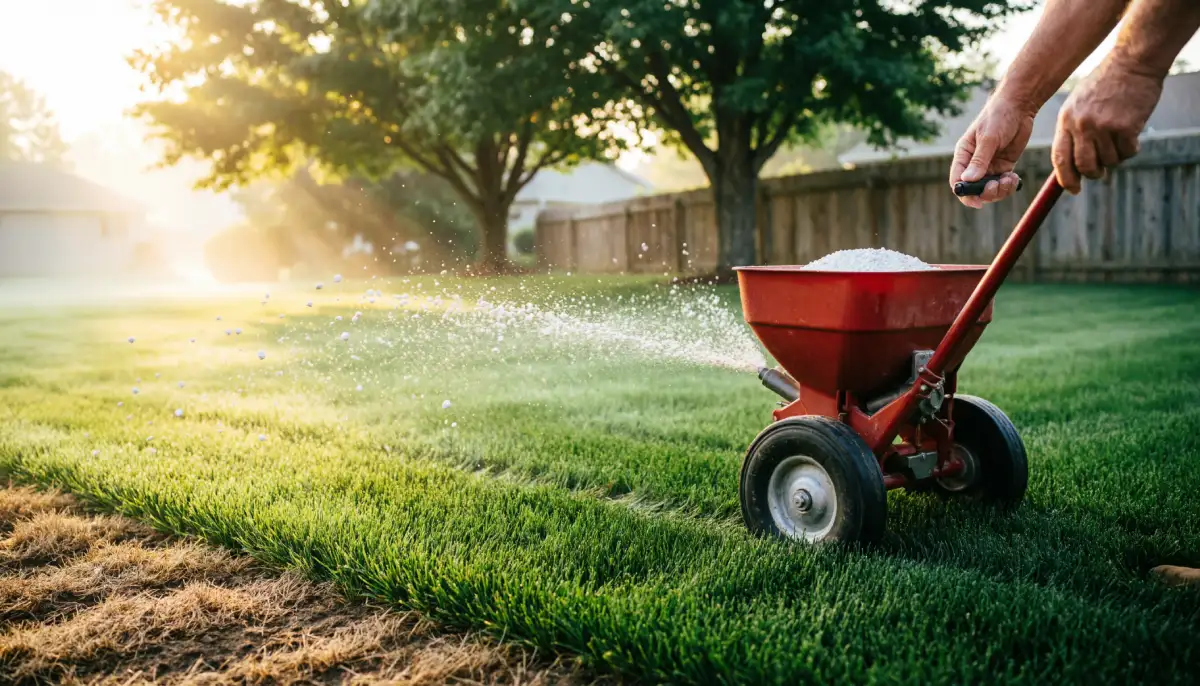
The Ultimate Guide to Lawn Lime Application: Rates, Science & The 48-Hour Protocol
Learn how to use lime on lawns with our 48-Hour Protocol. Get exact spreader settings, safety tips, and calculate your exact bags...
 Soil Testing
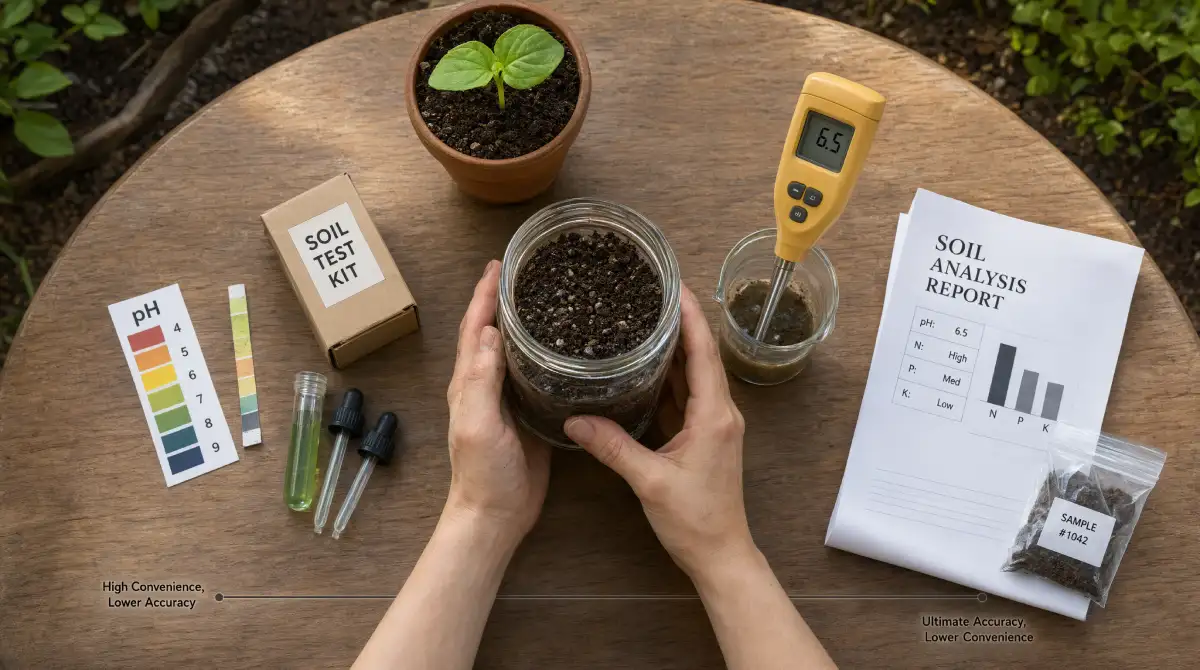
Soil Testing Kits & Meters: How to Choose the Right Tool for Your Soil
Discover the perfect soil testing method for your needs. Compare pH strips, chemical kits, digital meters & lab tests on our accuracy...
 Soil Testing
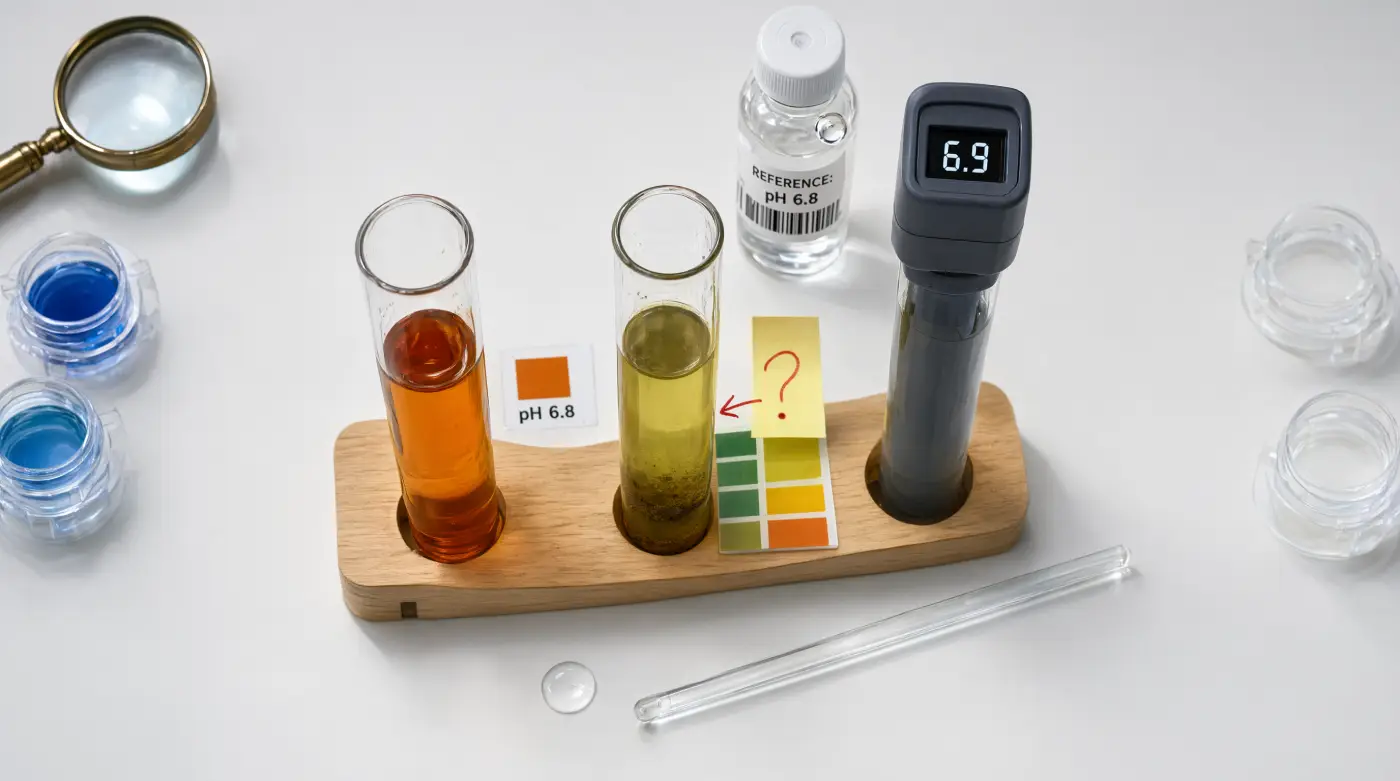
LaMotte vs. Luster Leaf vs. Rapitest Soil Test Kits: Which Is Most Accurate? (2026 Lab Test)
Lab-tested comparison: LaMotte (94% accurate) vs Luster Leaf 1601 Rapitest vs Rapitest Digital. See side-by-side photos, cost breakdown & which kit wins.
Calculate. Amend. Grow.
Three simple steps to scientifically optimized soil and peak crop performance.
Test Your Soil or Water
Get baseline water pH, buffer pH, CEC, or cation PPM using a home test kit or professional lab analysis.
Run the SoilTune Engine
Input your metrics. Our calculation engine applies SMP buffer equations, USDA reclamation stoichiometry, or Kohlrausch molar conductances.
Apply & Thrive
Get precise, cost-effective shopping lists in lbs, tons, or bags with built-in plant safety caps and apply with confidence.
Not Just Guesswork.
Peer-Reviewed Science.
Most online calculators use oversimplified, linear formulas that ignore soil buffering capacity, Cation Exchange Capacity, and osmotic salt limits. SoilTune utilizes peer-reviewed agronomic models to reflect physical soil chemistry accurately.
“Two soils can have the same active water pH of 5.5, but a heavy clay soil will require up to 3× more lime than a sandy loam to reach pH 6.5. Our calculators account for buffer pH, texture, and CEC to prevent costly under- or over-application.”
Same pH. Different Lime Demand.
Illustrative relative lime requirement to move soil from pH 5.5 to pH 6.5.
Buffer pH and CEC measure reserve acidity held on exchange sites that must be neutralized.
8 Precision Calculators for Every Grower
Select an agronomic tool below to get instant, scientifically accurate amendment recommendations tailored to your specific soil, crop, and water conditions.
Lime Requirement
Calculate exact pure CaCO3 tons/acre or bags needed based on SMP buffer pH, Adams-Evans, or CEC shift, adjusted for ECCE product fineness.
- SMP & Adams-Evans buffer models
- ECCE fineness & depth adjustment
Precision pH Down
Determine safe elemental sulfur (S0) or aluminum sulfate rates with bio-oxidation kinetics and built-in single-dose plant safety caps.
- Thiobacillus Q10 temp kinetics model
- Automatic root burn split-dosing
Fertilizer Blend
Formulate multi-nutrient dry or liquid blends. Solves sequential P → K → S → N matrix, liquid specific gravity, and inert filler volume.
- Dry bulk & liquid fertigation support
- Spray nozzle flow calibration & filler mass
CEC Calculator
Convert lab ppm concentration to charge equivalents (meq/100g). Includes empirical organic matter and clay mineralogy estimation models.
- Faraday atomic valence divisors
- Clay & organic humus CEC estimates
Base Saturation
Balance cation ratios (Ca, Mg, K, Na, H) and Ca:Mg ratios on the exchange complex using William Albrecht targets to improve soil tilth and aeration.
- Ca:Mg soil compaction diagnostic
- Calcitic vs Dolomitic amendment selection
Gypsum Requirement
Reclaim sodic soils (ESP > 15%). Computes pure CaSO4·2H2O tonnage using the USDA Handbook 60 sodium displacement model.
- USDA 0.86 displaced sodium formula
- Soil depth & leaching fraction guidelines
SAR & CROSS Diagnostic
Evaluate irrigation water sodicity hazards. Calculates standard SAR, Rengasamy CROSS, Suarez calcite-adjusted SARadj, and water gypsum dosing.
- CROSS structural stability index
- Water gypsum injection rate (lbs/ac-ft)
PPM to EC Fertigation
Convert elemental PPM targets to raw salt weights. Predicts solution EC (mS/cm) via Kohlrausch ionic molar conductances and Tank A/B segregation.
- Kohlrausch molar conductivity engine
- Tank A/B precipitation segregation
Agronomic & Technical Questions
Clear answers regarding soil testing protocols, buffer models, and calculator accuracy.
How is active soil pH different from buffer pH?
Active soil pH measures hydrogen ion concentration in the soil water solution (<1% of total soil acidity). Buffer pH (e.g., SMP or Adams-Evans) measures reserve acidity electrostatically bound to clay and organic matter particles. Calculating lime without buffer pH often under-estimates lime needs in clay soils by up to 300%.
Which lab extraction methods are compatible with SoilTune calculators?
Our engines support standard Mehlich-3, Ammonium Acetate (pH 7.0), Bray-1, Morgan, and 1:1 soil-water slurry extractions. Cation Exchange Capacity (CEC) is calculated using charge summation (meq/100g) normalized across all major laboratory standards.
Why do your pH lowering calculators split sulfur doses?
Applying more than 20 lbs of elemental sulfur or 50 lbs of aluminum sulfate per 1,000 sq ft in a single dose risks severe osmotic root burn and aluminum phytotoxicity. SoilTune automatically partitions large requirements into safe, split applications spaced 60 days apart.
What is the difference between SAR and CROSS water tests?
Sodium Adsorption Ratio (SAR) measures sodium hazard relative to calcium and magnesium. CROSS (Cation Ratio of Structural Stability) provides a superior measurement by factoring in potassium dispersion and the lower flocculating power of magnesium compared to calcium.