Pippin vs the Robot Vacuum (Treats Help)
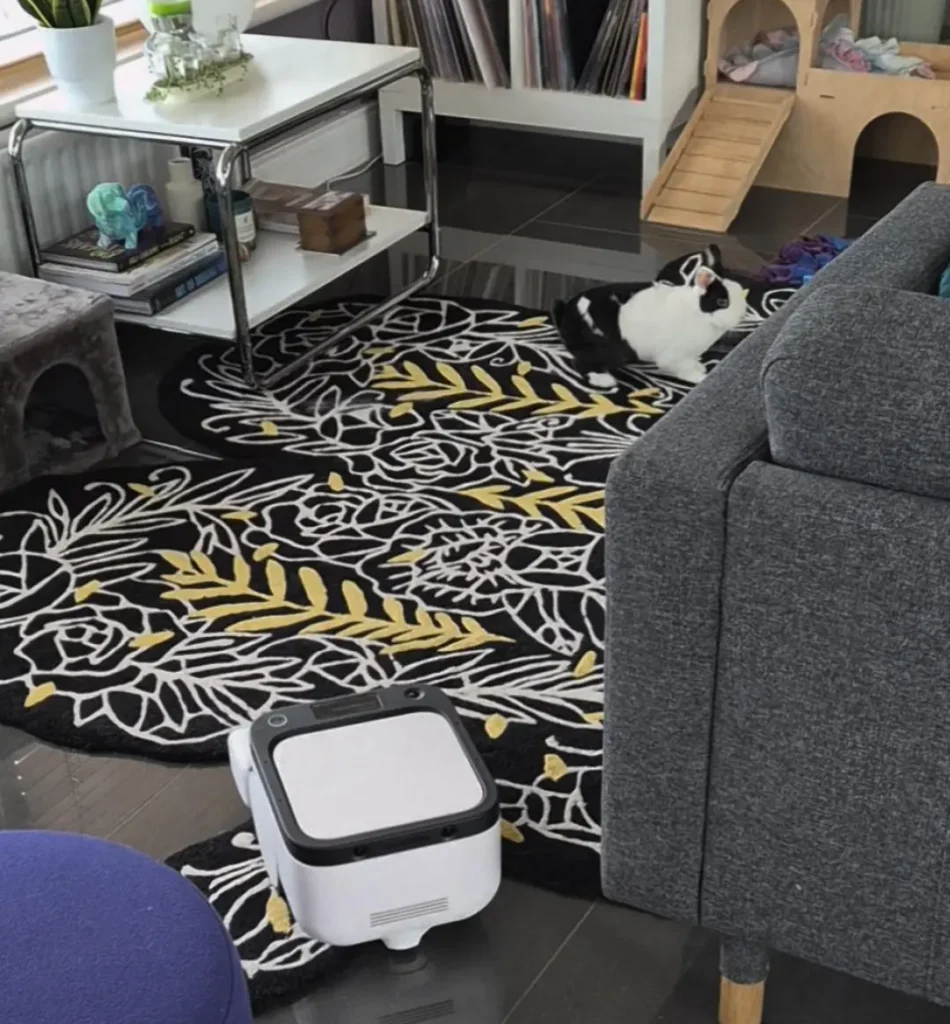
I am Azmi, writing from my living room in Meknes, and I can now draw you a map of this room made entirely of sound. The low corner behind the couch hums. The open tiles in the middle of the floor buzz. The rug under the coffee table swallows noise whole. I learned all of this the week our robot vacuum arrived, because Pippin, my resident critic, hears the world the way I see it, and he had opinions about the new help from the second it left its dock.
The bass note: first contact
Regular vacuum day was already theatre in our house. Pippin bites the old vacuum’s wheels and shoves his head against it until I steer around him, offended that a loud box dares to move through his territory. So when the robot vacuum woke up, a round flat disc gliding on its own with no human pushing it, I watched his whole body go rigid. He thumped, hard, twice, then retreated to the hallway entrance where the tiles meet the rug, the exact spot where he can see everything and commit to nothing. The robot hummed along the skirting board, unaware it had caused a constitutional crisis, and Pippin tracked it with his ears rotating like satellite dishes. Anxious, suspicious, deeply unimpressed. Day one ended with the robot docked and Pippin performing an extensive sniffing inspection of the dock itself, as if to say the intruder sleeps here now, apparently.
What I understood that evening, sitting on the floor with him, is that the fear was not one thing but a stack of things. There was the hum itself, a constant low drone unlike any household sound he knew. There was the movement, self-directed and unpredictable, cutting across his usual escape lines. And there was the smell, warm plastic and new electronics, rolling toward him at ankle height. Any desensitization plan that only addressed one layer would fail. I needed to work with the whole stack, at his pace, in the room as he actually hears it. My notes on earning trust slowly, the same patience I described in my trust diary from our first weeks, came straight back to me that night.
The mid-range: treats over the hum
So I started mapping the room by comfort. The rug under the coffee table is Pippin’s safe zone, because fabric eats the robot’s hum and his feet grip properly there. The hallway entrance is his observation post. The open tiles are the hard zone, where sound bounces and claws slide, and I decided the robot would simply not go there while Pippin was present in week one. Short runs only, ten minutes, with Pippin already settled on the rug with a pile of his favourite herbs before the robot even woke. Treats while it runs, plenty of them. A calm voice over the hum, naming what is happening like a sleepy commentator. Gentle pets during passes, never dragging him closer, always letting him choose the distance.
The turn came on day three, and it was tiny. The robot made its pass along the far wall, Pippin stayed flopped on the rug instead of bolting upright, and he accepted a sprig of dill mid-pass without pausing his chew. I nearly cried into the rug. By day five he had developed a supervisory position: loafed on the rug’s edge, chin resting, tracking the robot with eyes only, ears relaxed sideways. The thumping stopped. The retreating stopped. He still does not love the thing, and honestly he should not have to love it, but the panic drained out of the room like air out of a cushion. Short runs grew to twenty minutes. Treats shifted from constant bribes to occasional bonuses. My calm voice stayed, because it turns out the commentary was as much for me as for him.
- Safe zone first: rug down, treats ready, bunny settled before the robot wakes
- Short runs of ten minutes, growing only when flopping replaces bolting
- Let him set the distance; never carry him toward the machine
- Same route, same time of day, so the hum becomes predictable
The quiet corners: what the map taught me
Here is the part I did not expect. Learning Pippin’s sound map changed how I run the whole house. I vacuum the hard zones while he naps in the bedroom with the door ajar, his chosen quiet, and save the rug zones for shared sessions where he supervises. I run the robot at the same hour so it joins the furniture of his day rather than ambushing it. I keep his stacking cups and snuffle mat, the toys I wrote about in how mine play with stacking cups and snuffle mats, on the rug during runs now, so the robot’s pass predicts play rather than panic. The room sounds the same to me as it did a month ago. To him, the map has new roads, and they are safe because we drew them together.
There were setbacks, and I will not sand them down. One afternoon the robot bumped the water bowl stand and Pippin teleported under the couch for an hour. I ended the run, sat on the floor, and waited until he came out on his own for a head rub. No scolding, no coaxing with the robot running, just a reset. The next day we went back to a ten-minute run and he was fine. Progress with a prey animal is not a straight line; it is a tide. You respect the water and it comes back in.
Coda: the supervisor naps
Yesterday, for the first time, Pippin flopped fully onto his side while the robot worked the far wall, back feet kicked out, eyes half closed. Not asleep, not yet, but the flop is the promise naps are built on. I sat on the rug with my tea going cold and watched my suspicious, thumping, loudly opinionated rabbit decide that the help could stay. The robot docked itself. Pippin stretched, binkied once in the hallway purely out of principle, and demanded dinner. Chill is coming, one treat at a time, and ours will nap through it eventually. The map is finished, the hum has a home in it, and the supervisor has approved the new employee on a probationary but increasingly permanent basis.
Next in this chapter…
Vinegar Pro-Tip: White Funk Melts Away
I am Azmi in Meknes, and the most valuable thing I own cost less than bread: a bottle of white…
Escape Artists: How Do They Get Out?
I am Azmi in Meknes, first-time owner of two eleven-week-old escape artists, and for a week my large pen held…
Why Are Books the Only Thing He Eats?
I am Azmi, writing from Meknes, and I come to this case as both judge and fellow victim. The charge:…