Escape Artists: How Do They Get Out?
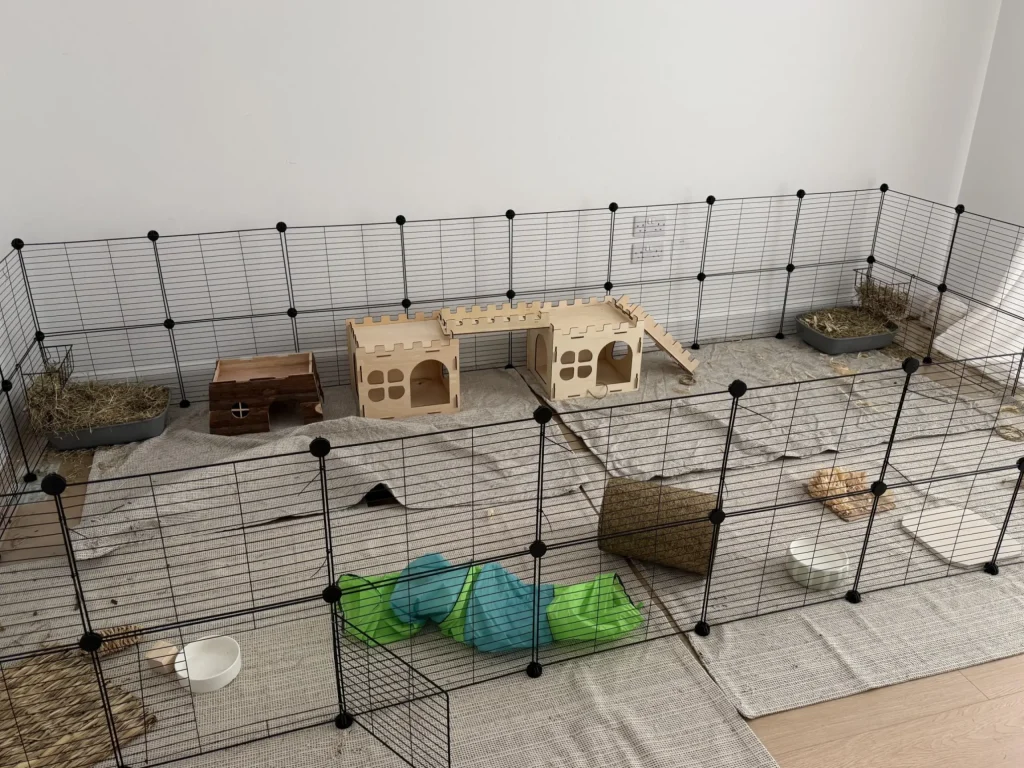
I am Azmi in Meknes, first-time owner of two eleven-week-old escape artists, and for a week my large pen held everything except its rabbits. Door closed, latch checked, bunnies outside. Every morning I found them sitting in the middle of the room like tiny foremen admiring a job well done, and I had no idea how they were getting out. So I stopped treating it as a mystery and started treating it as a build project: version after version of the pen, each one tested overnight by the world’s most motivated quality inspectors. This is the build log.
Build 0.1: the pen as the shop sold it
The starting setup looked responsible. A large exercise pen on the hard tiles, one door latched, a litter corner, hay rack, water bowl, and a fleece blanket folded in the corner for traction. The babies were eight weeks old when it went up and it held for about four days. Then came the first jailbreak. I checked the latch, certain someone had left it open. Nobody had. I lowered myself to rabbit height and surveyed the walls: smooth metal grids, no gaps at the joints I could see, height that looked generous next to such small bodies. I concluded the pen was fine and the rabbits were magic. This conclusion survived exactly one night, until I found them out again, both of them, sitting on the rug I had left outside the pen like a welcome mat for fugitives.
Overhead observation changed everything. From standing height the walls looked tall. From a chair, watching the babies play, I saw the truth: an eleven-week-old rabbit can launch. One of mine backs up two hops, springs off the fleece, and clears heights I would have sworn were impossible. The pen was not being unlatched or squeezed. It was being jumped, clean over the top, probably in the small hours when the house is quiet and athletic ambition peaks. My room-corner plans from my room corner for my rabbit had assumed a ground-level threat. The threat was ballistic.
Build 0.2: height, roof thinking, and the rug problem
The second build raised the walls with an extra panel row and, more importantly, rethought the floor. Hard tiles were the hidden accomplice: great for cleaning, terrible for landings, and the babies were skidding on takeoff, which told me a bad landing was only a matter of time. I laid cheap low-pile rugs inside and outside the pen, overlapping the pen’s footprint by a full rabbit-length so takeoffs and landings both grip. Under the rugs went waterproof mats, because eleven-week-olds are still polishing their litter habits and I refuse to learn about subfloor damage the hard way. The rugs did double duty as intended: safer zoomies, quieter thumps at night, and no more slip-sliding starts across the tiles.
- Walls raised one full panel; launch trajectories recalculated by the inspectors overnight
- Low-pile rugs inside and out, overlapping the pen edge for grip on both sides
- Waterproof mats under every rug, corners tucked so nothing bunches
- Furniture and boxes moved away from the pen walls to remove springboards
Build 0.3: closing the squeeze gaps
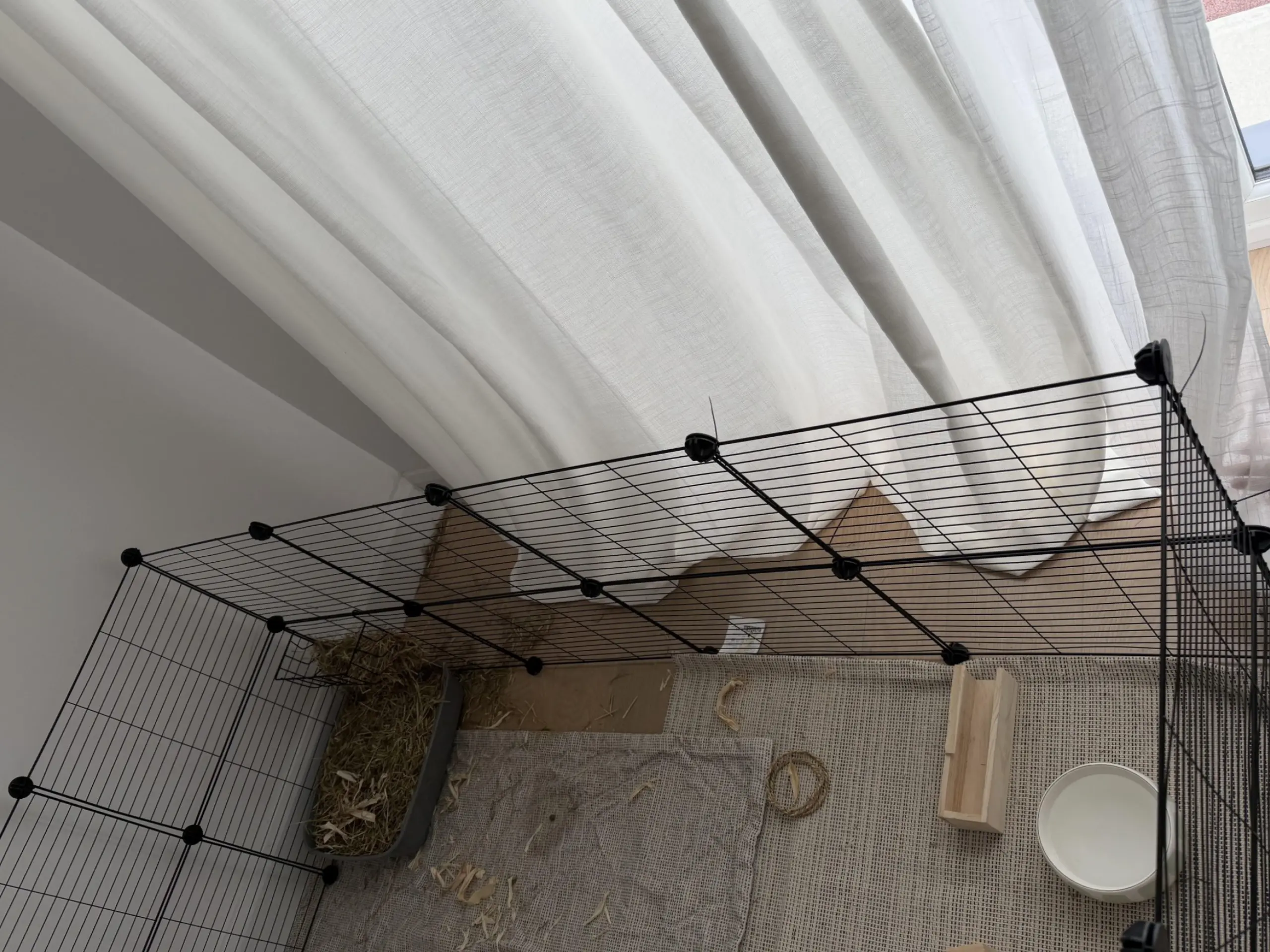
Raising the walls cut escapes by half and revealed the second method: squeezing. With the jump route harder, the babies went low, testing every joint where panels meet and where the pen meets the wall. I found one gap, barely a hand’s width, where the pen’s end panel stood off from the skirting board, flexing just enough for a determined eleven-week-old to pour through like water. Cable ties closed the panel joints. A heavy storage box, rabbit-proof and chew-proof, closed the wall gap. I also relearned a lesson from my enclosure notes on rabbits eating every flooring: anything within reach gets chewed, so every mat edge and rug corner near the walls got tucked under and weighted. If a tooth can find it, a tooth will test it.
Testing protocol was simple: tidy room, lights out, phone camera recording the pen for the first hour, morning inspection of bunny location. Night one of build 0.3: both rabbits inside at dawn, asleep in the litter corner like angels with sealed records. Night two: one escape, and the footage showed the method, a jump off the hay rack, which I had parked against the wall like a staircase. I moved the rack to the pen’s center that same morning. Night three through tonight: zero escapes. Either the pen works now or the inspectors allow it. Both are fine, as I keep telling myself, because the room outside is fully rabbit-proofed anyway: cables hidden, houseplants out of reach, doors to the kitchen closed.
Build 1.0: what ships, and what I check nightly
The current build, the one holding for two weeks, is this: tall walls, tied joints, no furniture springboards, hay rack centered, rugs with mats under, latch checked with a tug rather than a glance. My nightly check takes ninety seconds: tug the door, scan the joints, confirm the rack position, top up hay and water so nobody launches out of boredom or thirst. Morning check is the droppings and the hay level, which tell me whether the night was calm. The babies have full supervised room access every day, because a pen is a bedroom, not a life, and tired rabbits test walls less.
To the first-time owner finding rabbits outside a closed pen this week: you are not failing, you are being audited by professionals. Get low, watch the launch lines, close the squeeze gaps, rug the floors, and rabbit-proof the room beyond so an escape is an anecdote instead of an emergency. My inspectors now sleep inside most nights, sprawled on the rugs they once used as landing pads, and I fall asleep listening to the particular quiet of a build that finally holds. Version 1.0 ships. The testers have moved on to chewing the rug fringe, which is a problem for the next sprint.
Pen heights, latches, and materials stay vet-approved in my house, the versions iterate, the safety bar doesn’t.
Next in this chapter…

Vinegar Pro-Tip: White Funk Melts Away
I am Azmi in Meknes, and the most valuable thing I own cost less than bread: a bottle of white…
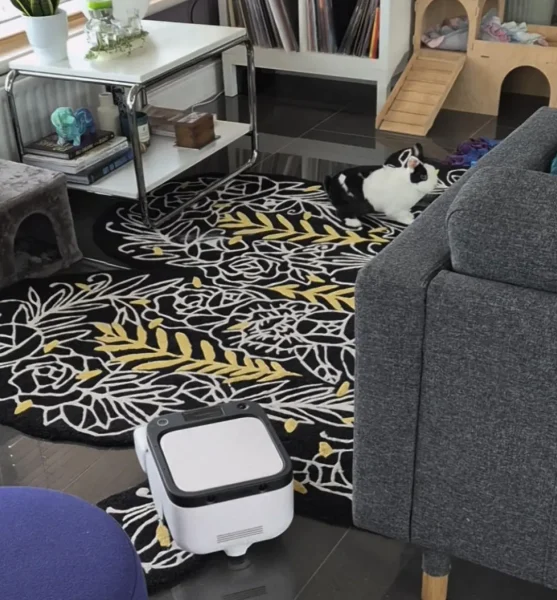
Pippin vs the Robot Vacuum (Treats Help)
I am Azmi, writing from my living room in Meknes, and I can now draw you a map of this…
Why Are Books the Only Thing He Eats?
I am Azmi, writing from Meknes, and I come to this case as both judge and fellow victim. The charge:…