Twenty-Five Hours Moving With the Whole Zoo

I am Azmi, writing from Meknes, and I have never driven further than the edge of my own comfort zone with a rabbit on board. So when I read about a twenty-five-hour move from Tennessee to Las Vegas with a rabbit, a cat, a gecko, a dragon, and two motorcycles, I sat with it for a long time. That is not a drive. That is a small travelling country changing time zones.
Twenty-five hours behind the wheel means at least two sunrises, one strange motel parking lot at midnight, and many petrol stations where you stand under buzzing lights wondering whether everyone inside is asleep. Add five animals with five different ideas about temperature, noise, and dignity, and the whole thing becomes a logistics puzzle I genuinely admire. I keep thinking about the dashboard of that car: the zoo manifest taped where the driver can see it, the way every stop must have been choreographed like a small military operation.
The fleet nobody auditioned for
Let me line up the passengers, because the comedy and the difficulty both live in the mix. A rabbit, who hears everything and forgives nothing. A cat, who will file a formal complaint about every mile. A gecko and a dragon, each with strong opinions about warmth that the mammals cannot even perceive. Two motorcycles, which I assume travelled on a trailer, holding very still and being the only members of the party who never needed a toilet break.
From my flat in Meknes, where my own rabbits supervise everything from the coolest corner of the room, the first thing I would worry about is sound. Rabbits do not care that the engine noise is normal. They care that it never stops. So the carrier planning mentioned in the original note is exactly where I would put my energy too: a big padded carrier, a floor that protects the feet, familiar hay that smells like home even when the world outside smells like petrol and rain.
I learned this from my own carrier pack list and what I grab first when we must leave: packing the carrier is really packing familiarity. The blanket that already smells right. The hay from the usual bag. A chew that has already been approved by the relevant authorities. Nothing new on moving day, because moving day is already new enough.
The rabbit seat, engineered for calm
If I were setting up the rabbit seat for twenty-five hours, I would treat it like building a small burrow inside a moving room. The carrier sits level, wedged so it cannot slide, with the door facing where the human can see it without turning around. A light cloth over part of the carrier gives shade without cutting airflow. Water comes from wet greens at stops rather than a sloshing bottle, because a rattling ball-bearing spout for a full day sounds like a special kind of torment for everyone.
The original note says practice short rides first with calm driving always, and I want to underline that twice. A rabbit that has only ever known the stillness of a living room does not owe you composure at motorway speed. Short practice laps around the block, then a slightly longer errand, then a proper half-hour drive: each one teaches you something. Does she press into the back corner? Does she eat hay while moving or only when parked? My rabbits tell me everything through hay. Hay eaten means the situation is acceptable. Hay ignored means I have work to do.
| Stop rhythm | What happens | Why it matters |
|---|---|---|
| Every fuel stop | Check carrier, offer wet greens, listen | Routine beats surprises on long drives |
| Every third stop | Longer pause, shade, quiet lap time | Gives the rabbit a stillness reset |
| Night halt | Carriers inside, room checked, doors secured | New rooms are escape puzzles with curtains |
The overnight question
Twenty-five hours of driving is never really twenty-five hours. It is two days with a strange night in the middle, and the strange night is where moves are won or lost. A motel room with five animals means a perimeter check before any carrier opens: gaps behind furniture, cords along the floor, the particular optimism of a cat examining an air vent. The rabbit gets one small verified-safe corner, not the whole room. Freedom can wait for Las Vegas.
I also think about the driver in this story, because the manifest on the dashboard works both ways. Someone driving that long while listening for every thump and rustle from the back seat is carrying a heavy mental load. Snacks, as the original note says, are not a joke. Twenty-five hours of snacks is a genuine welfare measure for the humans, and rested humans make better decisions at midnight petrol stations. I would add one rule of my own: no hero driving. If the eyes go strange, the whole zoo sleeps.
There is a detail I love in the original note, the line about rescue crates working great for travel. It tells me this person already thinks like a rescuer: use what is sturdy, what is proven, what has already survived something. A carrier that has done practice laps this month is a known quantity. On a desert crossing in January, known quantities are worth more than anything shiny and new. That roadside story of forty-five minutes to catch her on a roadside rescue night reminds me how quickly a loose animal becomes a crisis near traffic, so doors, clips, and headcounts at every single stop feel non-negotiable.
What I would do again, and what I would change
What I would keep: the padded carrier, the familiar hay, the calm driving, the manifest on the dashboard. Those four things are the whole philosophy. Comfort, scent, steadiness, and a list that means nobody gets forgotten when everyone is tired. What I would add from my Meknes habits is a small logbook on the passenger seat: time, place, who ate, who drank, who pooped. It sounds fussy until the second day, when nobody remembers anything and the logbook remembers everything.
January desert deserves its own paragraph. Cold mornings, warm afternoons, dry air the whole way. I would keep a fleece near the rabbit carrier and a thermometer where I can glance at it, because cars lie about temperature. Parked in sun, a car becomes an oven even in winter. Parked in wind, it becomes a fridge. The animals cannot open windows or ask for blankets, so the humans have to be their weather service, all twenty-five hours of it.
So here is my closing image, and I mean it fondly: somewhere on that long road, probably in the dark somewhere west of nowhere, the car pulls over, the engine ticks as it cools, and five animals eat something familiar while two motorcycles wait patiently on the trailer. The driver stretches, checks every latch twice, and tapes the manifest a little flatter against the dashboard. Solid plans, padded feet, twenty-five hours of snacks. See you in Vegas, bun. I hope the first binky in the new place made the whole drive worth it.
Next in this chapter…
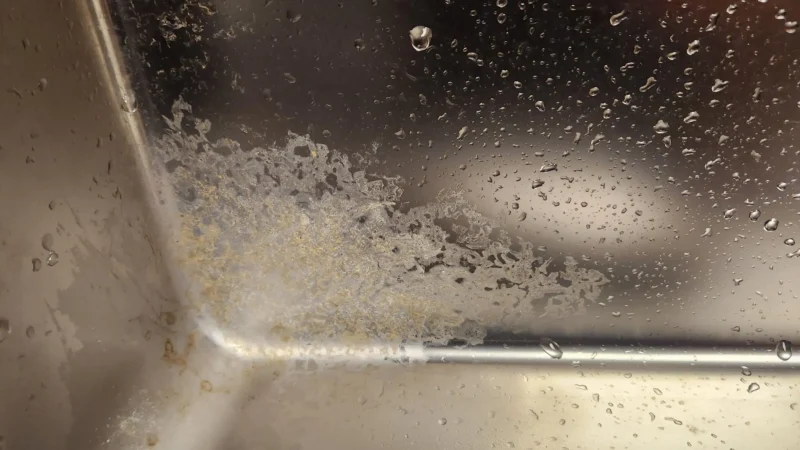
Vinegar Pro-Tip: White Funk Melts Away
I am Azmi in Meknes, and the most valuable thing I own cost less than bread: a bottle of white…
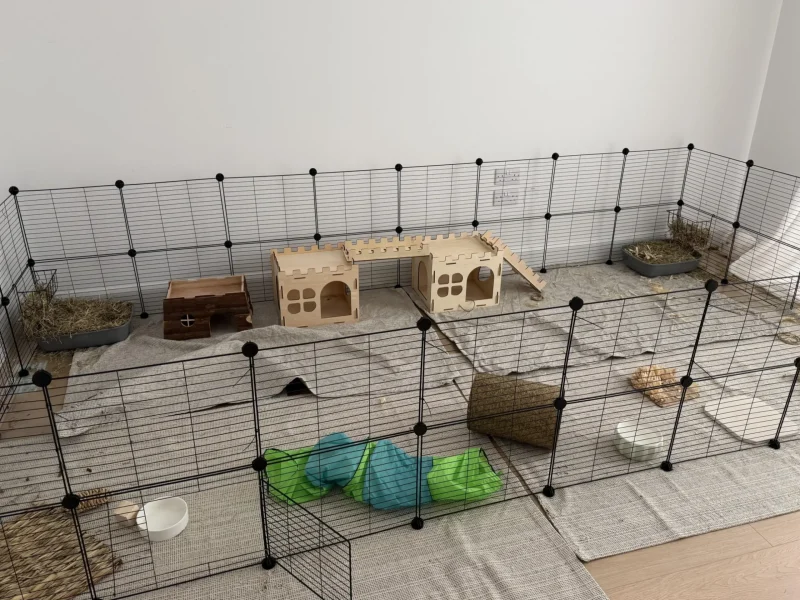
Escape Artists: How Do They Get Out?
I am Azmi in Meknes, first-time owner of two eleven-week-old escape artists, and for a week my large pen held…
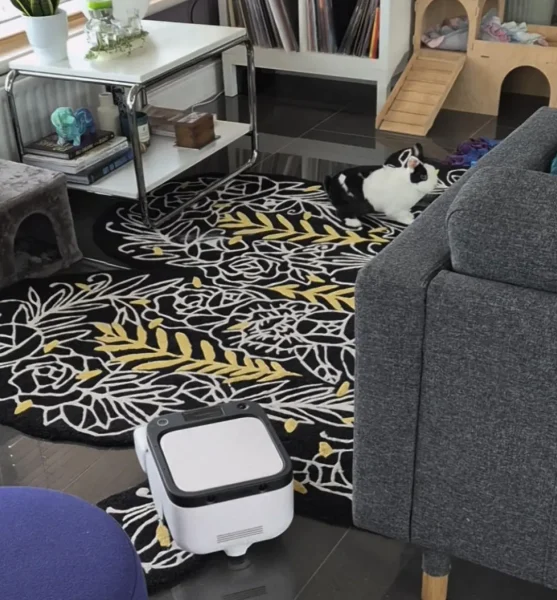
Pippin vs the Robot Vacuum (Treats Help)
I am Azmi, writing from my living room in Meknes, and I can now draw you a map of this…