Cats and Bunnies: Weird Cats Together
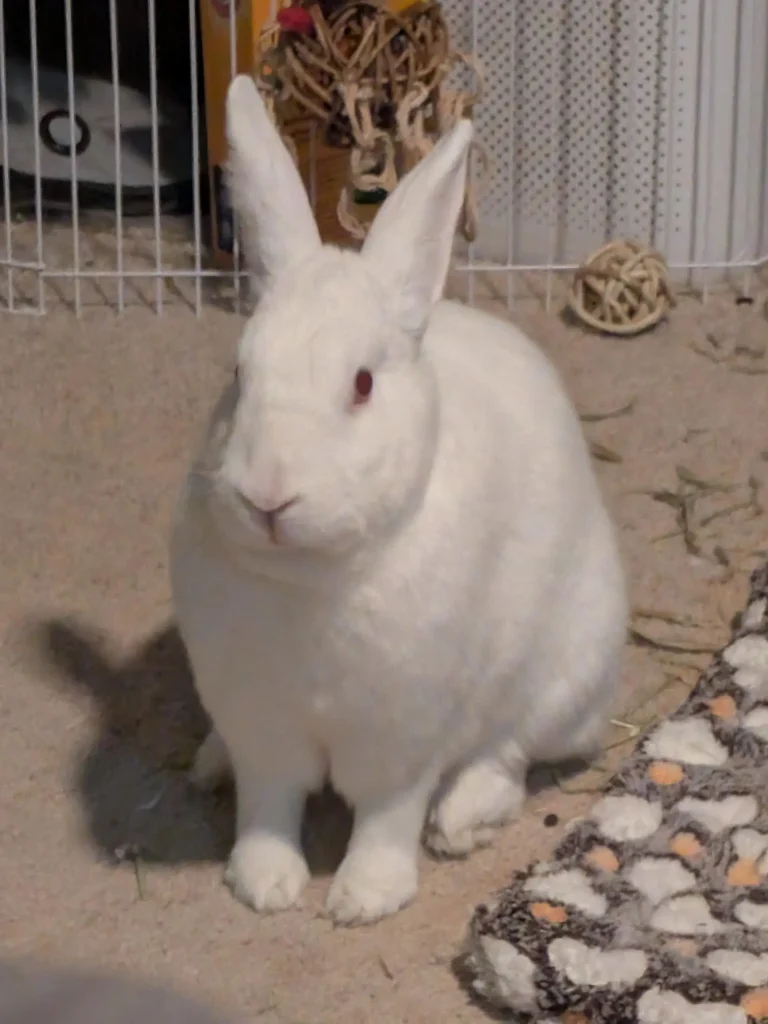
I live in Meknes with a small mixed household, and I have stopped trying to explain it to visitors in one sentence. I am Azmi, I keep a rabbit named Fluffy who is four, and I share the house with Max the cat who is three. Both are neutered, both are loved, and both have decided that the other is simply a strange version of themselves. The cats, I swear, think they are weird cats. The youngest of them even learned to binky once, a wobbly popcorn jump in the middle of the living room, and then sat down looking extremely pleased. And one of them now meows at me for hay top-ups, standing next to the rack like a tiny supervisor.
People ask whether cats and rabbits can live together, and I always answer the same way: mine do, with boundaries. It is not a fairy tale of instant friendship. It is a managed arrangement that works because every animal has somewhere to go when they want space. Fluffy has her zones, Max has his, and nobody is ever forced to share. That single habit explains most of our peace.
What the cat does, and what the rabbit makes of it
Max grooms himself ten times a day with great ceremony, and Fluffy watches with the focus of a student. Then she grooms herself, slower and more thorough, and Max watches back. They copy each other constantly. When Max stretches long along the rug after a nap, Fluffy flops a few minutes later in nearly the same spot. When Fluffy does a lap of the room at speed, Max follows at a trot for half the lap, then gives up and cleans a paw as if that had been the plan all along. My living room often looks like a rehearsal where neither performer admits they are rehearsing.
The food situation is the funniest contrast in the house. Max eats his meals fast, checks that nobody saw him enjoy it, and walks away. Fluffy eats hay the way I drink morning tea in Meknes, slowly, steadily, and at length, with total commitment. The day the youngest cat started meowing at the hay rack, I laughed for a full minute, then topped it up, because hay meows are honored promptly in this house. The cat filed no complaints and crunched a strand with great dignity. I wrote about my indoor boundaries in more detail in my balcony rules post, because the same thinking keeps both species calm.
The senior doe effect
Fluffy is older than Max by a year, and it shows in the way she carries herself. She does not chase, she does not startle easily, and she has a particular look, ears up and eyes steady, that has stopped more than one kitten-shaped rush in its tracks. I call it her senior energy. The cats read her the way younger siblings read an older sister: with respect, mild awe, and occasional attempts to test the limits. When a kitten gets too bouncy, Fluffy simply turns her back and hops to her resting mat. The message lands every time, and the kitten finds something else to attack, usually a toy I left out for exactly that reason.
I watch stress the way I watch the weather, daily and without skipping. Rabbits show it quietly: less eating, less moving, a reluctance to flop. So rabbits come first in every decision I make. If Fluffy seems off, the cats get playtime in another room and the house goes quiet until she is herself again. Anything about health that worries me goes to the vet, because I am a keeper, not a clinician, and I leave medical judgment to professionals. That habit has kept us out of trouble more than once, and it is the reason I can write lightly about funny moments without pretending I have all the answers.
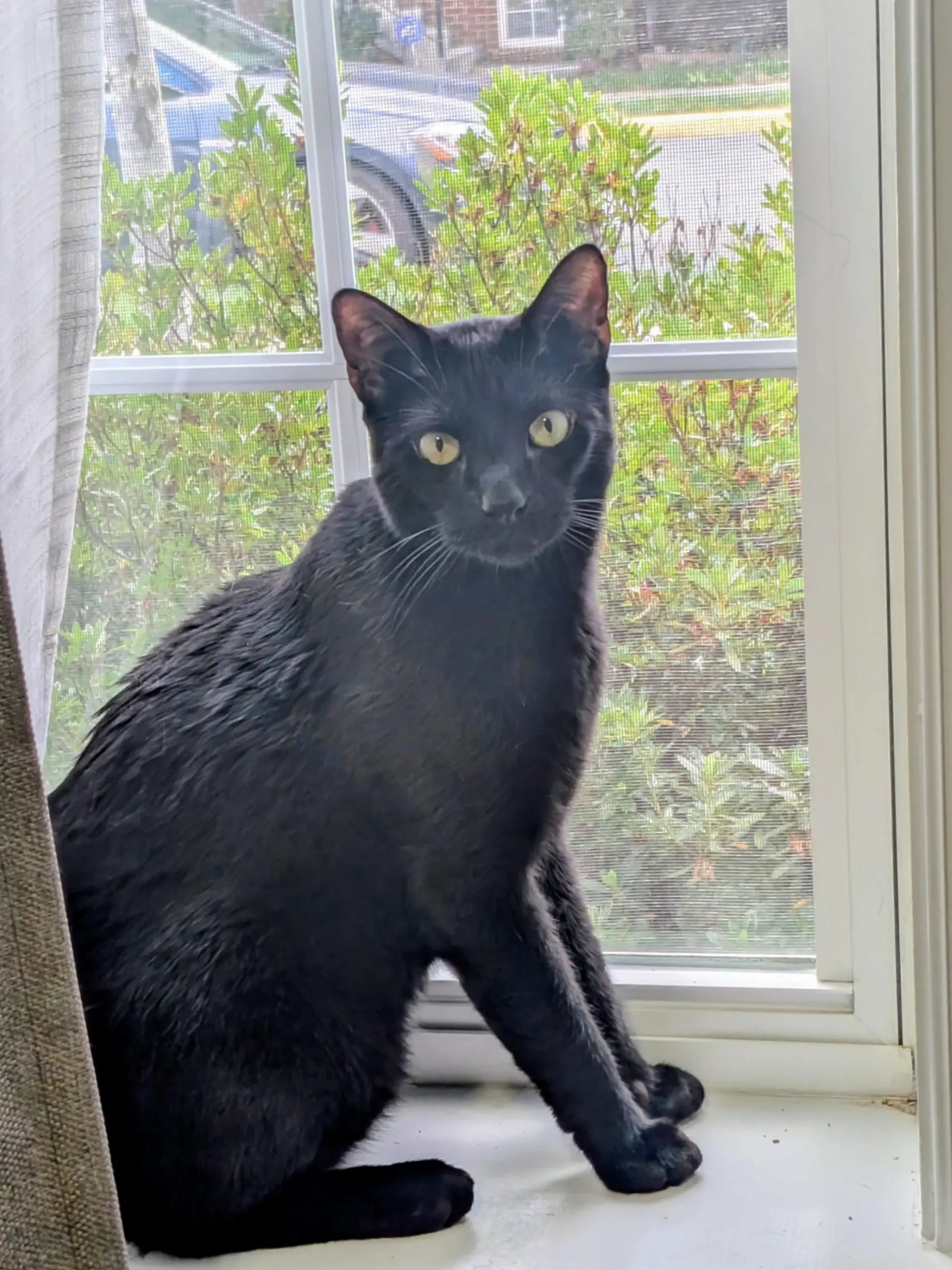
Separate zones, shared routines
Our rooms are arranged so that togetherness is always a choice. Fluffy has a corner with her mat, her hay, and a hide she can duck into. Max has his high spots, a windowsill and the top of the cupboard, where he surveys his kingdom. They meet in the middle of the living room, which belongs to everyone and therefore to no one. Morning is the social hour: I open the curtains, top up the hay, set down fresh water, and both of them do a slow patrol of the flat before settling near me. Evening is quieter. Max folds himself onto the couch arm, Fluffy loafs by my feet, and I get to sit between a purr and a soft grinding of teeth, which is a rabbit’s way of saying the day was good.
The stolen-bed saga deserves its own mention, because every mixed-species house has one spot everyone wants. Ours is the couch cushion with the afternoon sun on it, and I documented a similar takeover in the story of the stolen dog bed. Fluffy claims it by flopping across its full width. Max claims it by sitting exactly where Fluffy wants to flop and looking innocent. I claim it by sitting down first, which works until one of them leans against me with great weight and greater intent, and I move.
What I would tell anyone starting out
Start with separation and let friendship earn itself. Give the rabbit a room or corner the cat cannot barge into, give the cat height the rabbit cannot reach, and feed them apart so nobody guards anything. Introduce them in short sessions when both are calm and fed, and end each session before anyone gets tired. Keep claws trimmed through your usual groomer, keep the rabbit’s space predictable, and never leave a young cat unsupervised with a rabbit until you know both animals deeply. Most of all, let the rabbit set the pace. Cats adapt fast; rabbits forgive slowly. When Fluffy chooses to nap within sight of Max, I count that as a compliment she did not have to give.
Four and three, neutered and settled, weird cats all of them. The youngest still binkies when the mood strikes, Max still meows for hay top-ups he does not need, and Fluffy still runs this house with the calm of someone who never had to raise her voice. Best together with boundaries, happy house, hay for everyone who asks, meowing or not. When I look at the two of them loafing a careful meter apart in the evening light, I think this is what I signed up for without knowing it: not one pet or the other, but the strange warm middle where a rabbit and a cat agree, daily, to be family.
Next in this chapter…

Vinegar Pro-Tip: White Funk Melts Away
I am Azmi in Meknes, and the most valuable thing I own cost less than bread: a bottle of white…
Escape Artists: How Do They Get Out?
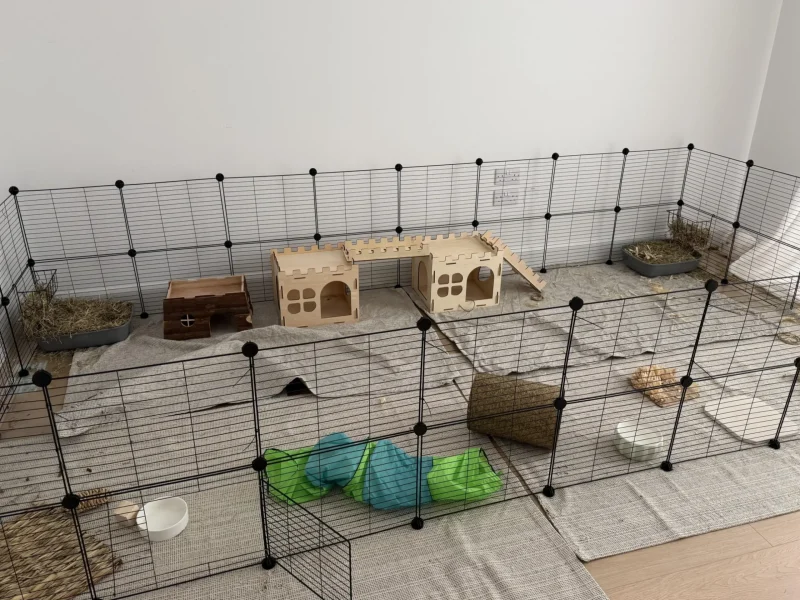
I am Azmi in Meknes, first-time owner of two eleven-week-old escape artists, and for a week my large pen held…
Pippin vs the Robot Vacuum (Treats Help)
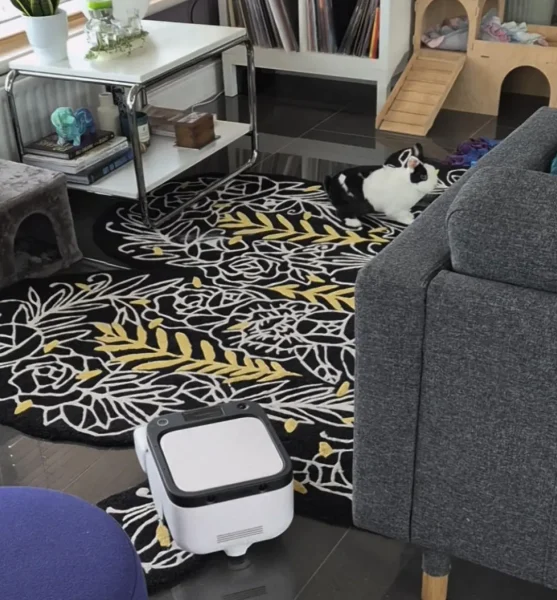
I am Azmi, writing from my living room in Meknes, and I can now draw you a map of this…