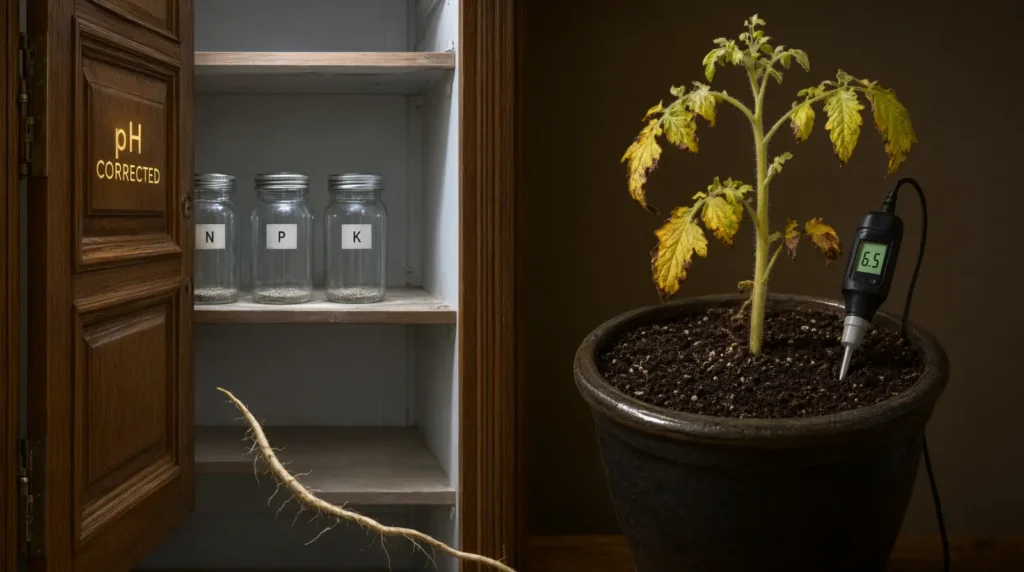
If your plants are still struggling after you corrected your soil pH, you have hit a very common gardening roadblock. You fixed the doorway, but the plants are still starving. The next diagnostic step is to check nutrient availability. A good npk testing kit helps you move beyond acidity and ask a much more practical question: can the plant actually access enough nitrogen, phosphorus, and potassium?
This 2026 guide explains exactly what consumer testing kits can do, where they fall short, and how to choose between a rapid soil kit and a liquid testing system for hydroponics. We will also break down the science in plain English so you can stop guessing and start growing.
Why Fixing pH Was Only the First Step
Think of soil pH as the gatekeeper to a pantry. If the pH is too high or too low, the pantry door is locked. Even if the pantry is completely full of food (nutrients), the plant cannot get inside to eat. This is why fixing pH is always step number one.
However, unlocking the door does not automatically mean the pantry is full. When plants remain pale, stunted, or prone to weak stems after pH is corrected, nutrients become the next logical suspect. Nitrogen drives leaf and shoot growth, phosphorus supports roots and flowers, and potassium regulates water use and disease tolerance. A plant can sit in perfectly adjusted soil and still starve if the root zone lacks available food.
What an NPK Testing Kit Actually Measures
An npk testing kit is designed to estimate the amount of plant-available nitrogen, phosphorus, and potassium in your growing medium. In soil kits, you typically mix a soil sample with water or a special extracting solution, let the dirt settle, and then use a color-changing capsule or liquid reagent. You compare the final water color against a chart to see if the nutrient level is depleted, adequate, or high.
Here is the most important thing to understand: these kits do not measure every single nutrient in the dirt. They only measure the fraction that can be easily extracted by the test chemistry. This is highly useful for quick screening, but it is not a complete fertility audit. A kit might show phosphorus as low, even though total phosphorus exists in the soil but is just temporarily locked up in organic matter. Treat home kit results as directional clues, not absolute scientific truths.
Why Testing NPK is Harder Than Testing pH
Testing pH is relatively simple because pH is a single, stable property of the soil water. You can measure it with a digital probe, a paper strip, or chemical drops, and it usually gives a repeatable reading.
Testing NPK is much harder because nitrogen, phosphorus, and potassium are three completely different chemical elements that behave in completely different ways. Nitrogen moves quickly and washes away with rain. Phosphorus binds tightly to dirt particles and barely moves. Potassium gets trapped inside clay and mineral structures. Because they exist in multiple chemical forms, extracting them accurately in a plastic test tube is a complex chemical challenge. This is why home kits are best used for spotting severe deficiencies rather than planning exact fertilizer dosages.
Rapid Soil Kits vs. an NPK Water Test Kit: Which Do You Need?
Choosing the right tool depends entirely on how you grow. If you are growing in dirt, you need a soil kit. If you are growing in water or liquid feeds, you need a liquid kit.
| Feature | Rapid Soil Kit (e.g., Luster Leaf 1601) | Liquid Water Test Kit |
|---|---|---|
| Best For | Traditional gardens, lawns, raised beds, potted plants | Hydroponics, aquaponics, liquid fertilizer programs |
| What it Tests | Nutrients extracted from solid dirt particles | Nutrients already dissolved in the water |
| Accuracy Level | Good for spotting major deficiencies | Highly accurate for dissolved nutrients |
| Speed | 10 to 15 minutes per sample | 1 to 5 minutes per sample |
An npk water test kit is specifically designed for nutrient solutions, reservoir water, and liquid fertilizer systems. Because hydroponic roots live directly in the water, the water chemistry is exactly what the plant is eating. The advantage of water testing is immediacy. You can detect a reservoir imbalance before the plants even show physical stress. The disadvantage is volatility; nutrient concentrations in water change quickly as plants drink and water evaporates. Always test your water at the same time of day for consistent results.
How to Get the Best Results From a Soil Kit
The biggest mistake beginners make is poor sampling. If you test a single handful of dirt from the edge of your garden, your results will be wrong. To get accurate readings, follow these simple steps:
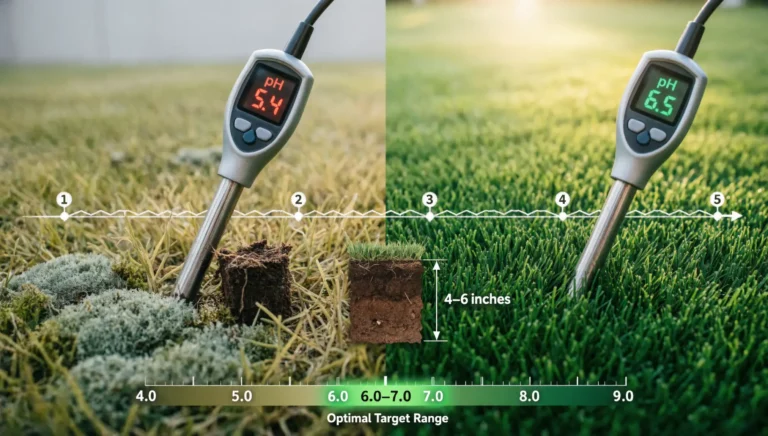
- Take Multiple Samples: Dig small samples from 4 to 5 different spots in your garden bed.
- Go to Root Depth: Dig down about 4 to 6 inches, which is where the active roots are feeding.
- Mix it Together: Put all those small samples into a clean bucket and mix them thoroughly. This creates a “composite” sample that represents the whole bed.
- Remove Debris: Pick out any rocks, roots, or mulch before adding your test water.
- Wait After Feeding: Do not test the soil immediately after applying fertilizer or heavy rain. Wait at least two weeks for the nutrients to settle into the soil profile.
When to Upgrade to a Soil Test Kit Professional Lab Panel
A home hobby kit is perfect for a quick sanity check in the backyard. But when does it make sense to spend the money on a soil test kit professional lab analysis?
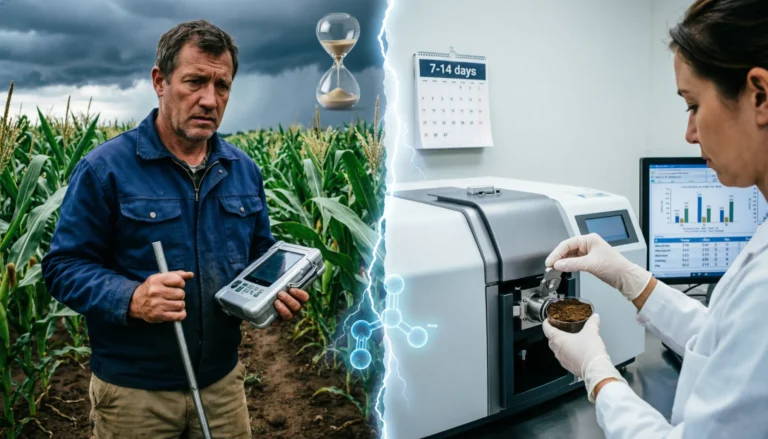
You should upgrade to a professional lab test when the cost of being wrong is high. If you are managing a large commercial crop, an expensive orchard, or dealing with a persistent lawn disease that refuses to go away, home kits are not enough. Professional labs use standardized chemical extractants (like the Mehlich-3 or Bray methods) that perfectly mimic how plant roots absorb food.
A professional report will not just give you NPK numbers. It will also measure calcium, magnesium, sulfur, organic matter, and cation exchange capacity. This is crucial because nutrients interact with each other. For example, if your soil has massive amounts of calcium, it can physically block the plant roots from absorbing potassium, even if the potassium is present. A professional lab helps you see the complete chemical picture so you do not blindly add more fertilizer and accidentally create a toxic imbalance.
Visual Cheat Sheet: What Do Deficiencies Look Like?
Before you even open a test kit, your plants will give you visual clues. Use this simple guide to match symptoms with potential nutrient shortages:
- Nitrogen Deficiency: The oldest, lowest leaves turn pale yellow or light green first. The plant looks generally stunted and weak. (Nitrogen moves to new growth, leaving the old leaves to starve).
- Phosphorus Deficiency: Leaves may look unusually dark green, or develop a distinct purple or reddish tint on the undersides. Growth is very slow, and flowering or fruiting is delayed.
- Potassium Deficiency: The edges and tips of the older leaves look scorched, brown, or curled. Stems may be weak and prone to bending. Fruit quality is usually poor.
If your visual symptoms match your test kit results, you have a confirmed diagnosis. If they completely contradict each other, retest your soil, check your watering habits, and consider sending a sample to a professional lab.
Final Verdict: Choose the Right Tool for Your Garden
Beyond pH, the real secret to healthy plants is understanding what is actually available to their roots. Rapid soil kits are excellent, affordable tools for quick screening and basic garden decisions. They are perfect for the home grower who wants to ensure their beds are adequately fed before planting season.
On the other hand, an npk water test kit is an absolute necessity for hydroponic growers and liquid-fertilizer users who need to monitor dissolved nutrients in real-time. And for those managing high-value crops or complex soil issues, investing in a soil test kit professional lab report will save you money on wasted fertilizer and guarantee long-term soil health.
Start by fixing your pH, confirm your nutrient levels with a home kit, and use visual symptoms to guide your next steps. That is how you stop guessing, avoid burning your plants with excess fertilizer, and give your garden the exact support it needs to thrive.