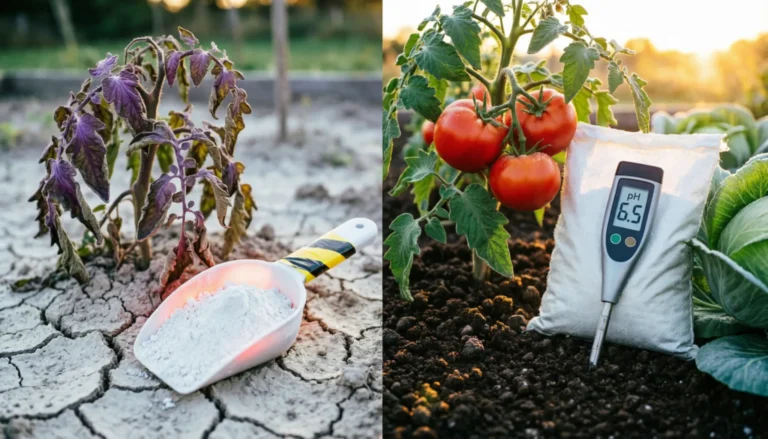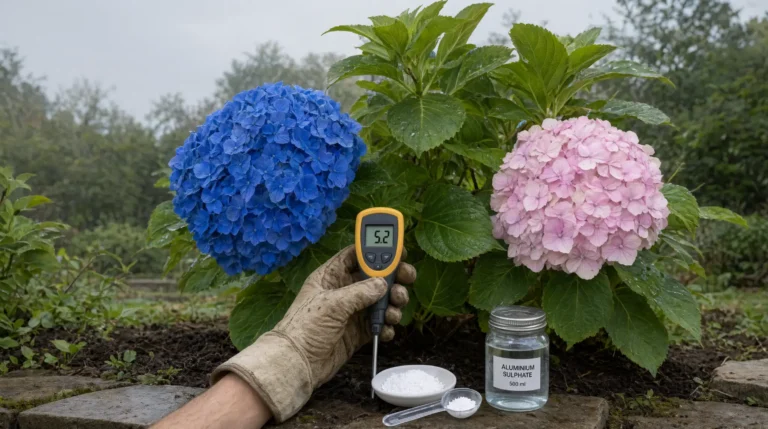
You’ve got heavy clay soil that turns into concrete every summer, or your recent pH test came back screaming “too acidic.” You walk into the local garden center, and there they are sitting side by side on the pallet: a bag of gypsum and a bag of lime. The employee shrugs, and the internet gives you twelve contradictory answers. So, which one do you actually need?
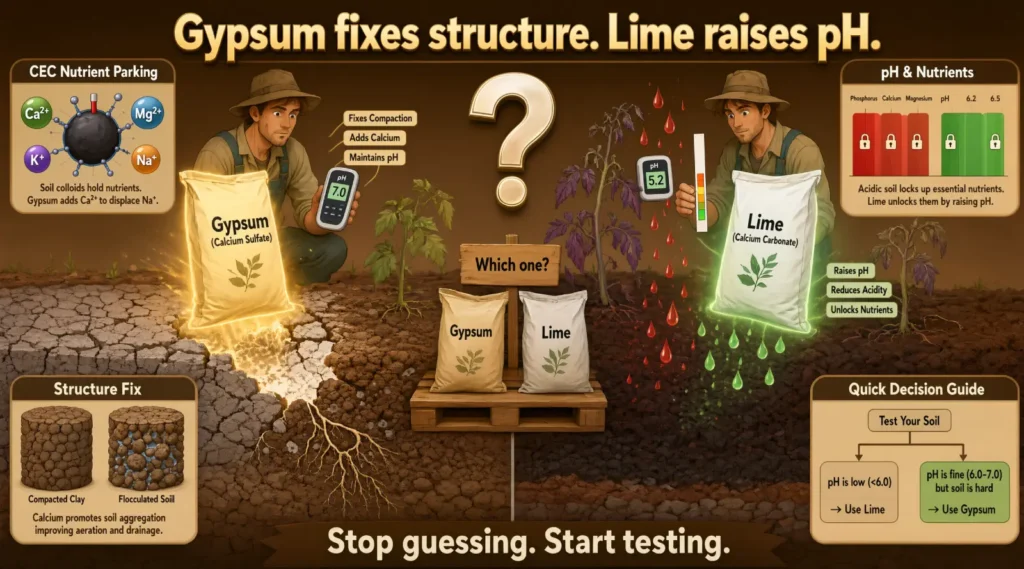
Here is the definitive, no-fluff answer: gypsum and lime do completely different jobs. Gypsum fixes soil structure without touching your pH levels. Lime raises your pH and adds calcium simultaneously. Pick the wrong one, and you will waste your hard-earned money, or worse, make your soil problem much worse.
The Quick TL;DR:
If your soil is too acidic (low pH) and needs calcium, buy Lime.
If your soil pH is fine but you have heavy, compacted clay or salty soil that won’t drain, buy Gypsum.
Never guess. Always start with a basic $20 soil test.
This guide breaks down the gypsum vs lime for soil debate once and for all. We will explain the science in plain English, debunk the biggest myth in gardening, and introduce you to a concept called CEC that will completely change how you think about your dirt.
The Biggest Myth in Gardening: “Gypsum Lowers Soil pH”
Let’s kill this misconception right now because it costs home gardeners and farmers hundreds of dollars every single year. Gypsum (calcium sulfate) does NOT raise or lower soil pH. It is completely pH-neutral. Repeat that to the well-meaning neighbor who swears gypsum “sweetens” acidic soil, it simply doesn’t.
When gypsum dissolves in water, it breaks apart into calcium ions and sulfate ions. Neither of these ions significantly shifts the hydrogen ion concentration in your dirt, which is what defines pH.
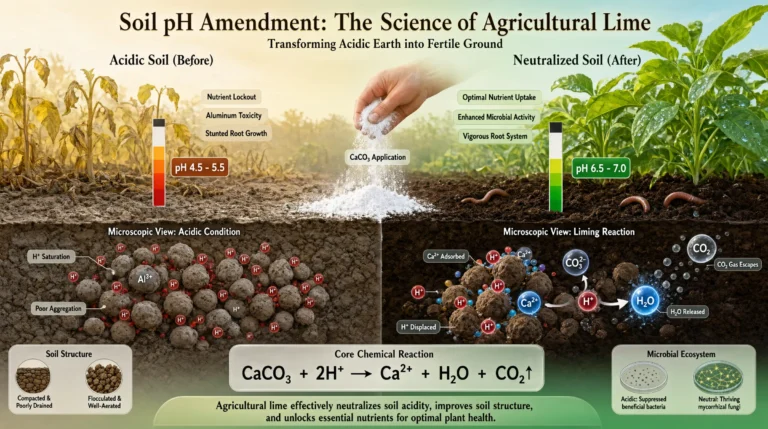
Lime (calcium carbonate), on the other hand, actively neutralizes hydrogen ions in acidic soil, pushing the pH upward. If your soil test reads 5.2 and your tomatoes prefer a comfortable 6.5, lime is your tool. Gypsum will not help you reach that goal.
What Gypsum Actually Does (And Why Clay Soil Lovers Swear By It)
If gypsum doesn’t touch pH, why does everyone recommend it for breaking up clay? The answer lies in how clay particles interact with sodium.
In soils that are high in sodium (often called sodic soils), clay particles repel each other. Imagine trying to push the same poles of two magnets together, they push apart. This creates a dispersed, sticky, airless mess that drains poorly and forms a hard crust when dry.
Gypsum acts as the mediator. The calcium ions in gypsum swap places with the sodium on the clay surface. The displaced sodium then washes away with rain or irrigation, and the clay particles finally relax and clump together (a process called flocculation). Think of it like turning loose dirt into coarse breadcrumbs.
The practical result for your garden is massive: better drainage, more oxygen reaching the roots, easier digging, and no more hard surface crust. Gypsum is also the go-to amendment when you need to add calcium to alkaline soils (pH above 7.0) where adding lime would push the pH dangerously high.
Use gypsum when:
- Your soil is heavy clay with poor drainage, but your pH is already neutral or alkaline (7.0 or higher).
- A soil test shows high sodium levels or a high Sodium Adsorption Ratio (SAR).
- You need to add calcium for crops like tomatoes, peppers, or potatoes without shifting your pH.
- You are trying to improve the structure of compacted subsoil after new construction.
What Lime Actually Does (And When It’s Non-Negotiable)
Agricultural lime works on two vital fronts. First, the carbonate component reacts with free hydrogen ions in the soil, neutralizing acidity and raising the pH over a period of 3 to 6 months. Second, it supplies essential calcium (and magnesium, if you choose dolomitic lime) as a plant nutrient.
When soil gets too acidic, essential nutrients like phosphorus, potassium, and magnesium become “locked up” and unavailable to plant roots.同时, toxic elements like aluminum become more soluble and can burn roots. Lime unlocks the good stuff and neutralizes the bad.
Use lime when:
- A reliable soil test shows a pH below 6.0 for most vegetables, or below 5.5 for standard lawns.
- Your region receives heavy rainfall, which naturally leaches basic minerals out of the soil and acidifies it over time.
- You have been applying ammonium-based synthetic fertilizers for years, which naturally drive soil pH down.
- Your plants show signs of aluminum or manganese toxicity, such as severely stunted roots or purplish leaves.
Cation Exchange Capacity (CEC): Your Soil’s “Nutrient Magnet Strength”
Now we arrive at the concept that ties everything together and explains why amendments work differently in different yards. Cation Exchange Capacity, or CEC, measures how many positively charged nutrient ions (like calcium, magnesium, and potassium) your soil can hold onto before they wash away into the groundwater.
Think of CEC as the strength of your soil’s nutrient magnets, or the number of parking spaces in your soil’s nutrient parking lot.
Sandy soil has a very low CEC (around 3 to 8). It has weak magnets and very few parking spaces, meaning when you add fertilizer, it washes right out. Clay and organic-rich soils have a high CEC (20 to 40+). They have strong magnets and a massive parking lot, meaning they hold onto nutrients beautifully.
Here is where lime earns extra credit. When you lime an acidic soil, you are replacing the hydrogen and aluminum ions (which take up parking spaces but don’t feed plants) with calcium and magnesium. This frees up space for other nutrients. In effect, liming an acidic soil increases its usable CEC, making every future fertilizer application vastly more efficient.
Gypsum, by contrast, doesn’t free up CEC sites through pH change. It swaps calcium for sodium, improving physical structure, but the total number of nutrient exchange sites stays roughly the same. This is a critical distinction for anyone trying to build long-term soil fertility.
Cation Exchange Capacity Calculator: Do You Actually Need One?
If you have been searching for a cation exchange capacity calculator online, you have probably stumbled onto complex spreadsheets asking for the exact percentages of sand, silt, clay, and organic matter in your yard.
The basic estimation formula used by these calculators looks like this:
Estimated CEC = (3.5 × % clay) + (1.0 × % silt) + (organic matter % × 150)
For example, if you have a soil with 30% clay, 40% silt, and 3% organic matter, a calculator would estimate your CEC to be roughly 20 to 25. That indicates a moderately fertile loam.
However, free online calculators are just rough estimates at best. Soil mineralogy varies wildly by region, and a web calculator cannot account for the specific type of clay in your yard. The only truly reliable CEC number comes from a professional laboratory soil test. Most university extension labs include CEC in a standard $15 to $30 test.
That said, using a quick calculator can help you triage your soil before spending money on a lab test. If your estimated CEC is below 10, you are dealing with sandy, low-fertility soil where adding organic matter (like compost) will matter far more than adding gypsum. If it is above 30, you have plenty of holding capacity and should focus entirely on balancing your pH and physical structure.
The 30-Second Decision Guide: Gypsum vs. Lime
Still unsure which bag to put in your shopping cart? Walk through these three simple questions:
| Your Soil Situation | What You Need | Why? |
|---|---|---|
| pH is below 6.0 (Acidic) | Lime | Neutralizes acidity, raises pH, and unlocks nutrients. |
| pH is above 7.0 (Alkaline) + Heavy Clay | Gypsum | Breaks up clay without raising the pH any higher. |
| pH is 6.0 – 7.0 (Perfect) + Poor Drainage | Gypsum + Compost | Improves structure and drainage without messing up perfect pH. |
| High Sodium / Salty Soil | Gypsum | Calcium displaces toxic sodium so it can wash away. |
Can You Use Both? (Yes, But Not Blindly)
In rare cases, a soil can be mildly acidic and simultaneously suffering from sodium buildup. A split program can work beautifully: apply lime to correct the pH first, then apply gypsum the following season to address the sodium and structure.
Just do not apply them simultaneously at massive rates. The calcium from both sources can oversaturate your soil’s exchange sites, leading to a magnesium or potassium deficiency. Space the applications 4 to 6 months apart and always retest your soil afterward.
Application Tips That Save You Time and Money
- Timing is everything: Apply lime in the fall so it has the winter moisture to react before spring planting. Gypsum can be applied any time the soil is not frozen, but fall is still ideal.
- Incorporation matters: Till or rake both amendments into the top 6 to 8 inches of soil. A surface-only application is 40% to 60% less effective because the materials won’t reach the root zone.
- Water it in: Gypsum specifically needs moisture to dissolve and move the sodium downward. Irrigate with about 1/2 inch of water immediately after application.
- Particle size dictates speed: Pelletized lime is easier to spread and acts slightly faster than powdered ag lime. Granular gypsum dissolves more evenly and is much less dusty than powdered gypsum.
- Retest every 2 to 3 years: Soil chemistry changes. Don’t reapply blindly based on what you did three years ago.
Final Verdict
The gypsum vs lime for soil question isn’t really a competition, it’s a diagnosis. Gypsum is your structural repair kit for clay and sodium issues. Lime is your pH reset button and CEC optimizer. Neither is universally “better.” One is simply correct for your specific dirt.
Skip the guesswork, grab a trowel, and send a sample to your local extension office. Let the laboratory numbers tell you whether you need the structural repair kit or the pH reset button. Your plants, your lawn, and your wallet will thank you.