Picture this: you have bought the premium fertilizer, watered faithfully, applied thick layers of organic mulch, and even talked nicely to your garden beds. Yet, the leaves are yellowing, the tomatoes are stunted and sulking, and the blueberry bushes you planted two springs ago have not produced a single berry. Before you spend another dollar on plant food or expensive soil amendments, stop. The problem probably is not what you are adding to your dirt. The problem is the foundation itself, specifically, its soil reaction.
If the phrase “soil reaction” sounds like it fell out of a mid-century agriculture textbook, that is because it essentially did. It is the older, formal scientific term for what we now universally call soil pH. Despite the shift in everyday terminology, “soil reaction” is still printed on official USDA soil survey reports, agronomy bulletins, and countless older gardening resources. If you are reading a soil test report and see this term, it can be confusing. In this comprehensive guide, we will translate the term into plain English, walk you through the visual soil reaction scale, explain the true importance of pH in soil, and map common plants to the exact chemical zones they need to thrive.
What Is “Soil Reaction”? The Old-School Term, Translated
In one simple sentence: soil reaction is simply the pH of the soil. It is a measurement of how acidic or alkaline your ground is. The word “reaction” is borrowed straight from foundational chemistry, where it describes whether a solution reacts as an acid, a neutral substance, or a base. Soil scientists have used the term for more than a century. As far back as the 1920s, foundational journals like Soil Science were publishing extensive papers on the litmus method for detecting the soil reaction. Today, university extension services and professional soil labs still use “soil reaction” and “soil pH” interchangeably.
To understand the chemistry briefly, the pH scale measures the concentration of hydrogen ions in the soil solution. The scale runs from 0 to 14, with 7.0 acting as the exact neutral midpoint. Readings below 7.0 are acidic; readings above 7.0 are alkaline, which is also referred to as “basic.” Most garden, lawn, and farm soils fall somewhere between 4.0 and 8.5.
Here is the critical detail that almost every beginner misses: the scale is logarithmic, not linear. A soil at pH 5.0 is not twice as acidic as a soil at pH 6.0. It is ten times more acidic. Furthermore, a soil at pH 4.5 is a full hundred times more acidic than one at 6.5. This exponential math is exactly why a seemingly small shift on a home test kit can completely alter how your plants look, grow, and absorb nutrients.
The Soil Reaction Scale: Acidic, Neutral, and Alkaline Zones
Professional soil scientists do not just categorize dirt as “acid” or “alkali.” The USDA Natural Resources Conservation Service divides the soil reaction scale into precise descriptive zones. If you order a professional soil test, you will see these exact classifications on your official report.
| Reaction Zone | pH Range | Plain-English Translation |
|---|---|---|
| Ultra / Extremely Acid | Below 4.5 | Battery-acid territory; highly toxic, rare in standard gardens |
| Very Strongly Acid | 4.5 to 5.0 | Blueberry heaven, but tomato misery |
| Strongly Acid | 5.1 to 5.5 | Classic acid soil problems and nutrient lockout begin here |
| Moderately Acid | 5.6 to 6.0 | Fine for potatoes, azaleas, and rhododendrons |
| Slightly Acid | 6.1 to 6.5 | The absolute sweet spot for most vegetables and lawns |
| Neutral | 6.6 to 7.3 | The biological buffet is fully open for maximum nutrient uptake |
| Slightly Alkaline | 7.4 to 7.8 | Iron lockout begins for acid-loving plants |
| Moderately Alkaline | 7.9 to 8.4 | Common in arid, limestone-rich, or desert regions |
| Strongly / Very Strongly Alkaline | 8.5 and above | Severe micronutrient deficiencies, poor soil structure |
For everyday gardening and landscaping, you can easily collapse this detailed matrix into three primary zones: acidic (below 6.5), neutral (6.6 to 7.3), and alkaline (above 7.3). Most crops are happiest between 6.0 and 7.5, with the 6.0 to 7.0 range considered the universal ideal for the vast majority of landscape plants and vegetables.
The Significance of Soil pH: Why Reaction Matters More Than Fertilizer
Soil pH is frequently called the single most important factor in plant health because it acts as the master control switch for nutrient availability, microbial growth, and overall yield. The true significance of soil pH comes down to four massive biological and chemical mechanisms happening right beneath your feet.
1. The Nutrient Lockout Effect
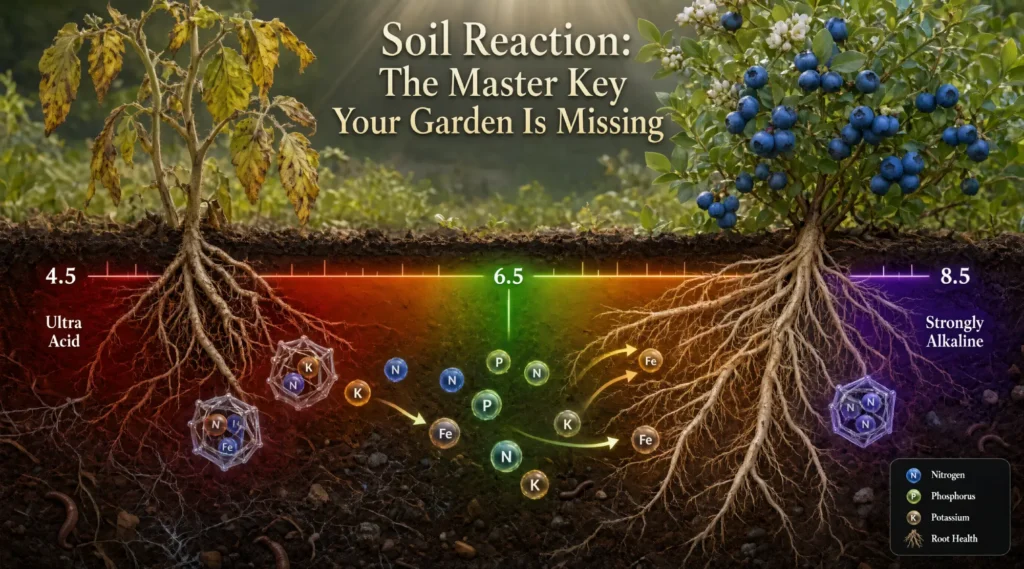
Seventeen essential elements are required for plant growth, and fourteen of them are extracted directly from the soil. However, every single one of those nutrients must dissolve in the soil’s moisture solution before the root hairs can absorb it. Soil reaction directly controls that solubility. Phosphorus, for example, is most available to plants right around pH 6.5. In strongly acid soils, phosphorus, calcium, and magnesium get chemically tied up, binding with iron and aluminum. In alkaline soils, crucial micronutrients like iron, manganese, zinc, and copper become insoluble. The classic visual symptom of this is chlorosis, pale yellow leaves with distinctly green veins, on plants that are literally starving for iron while sitting in a soil full of it. Fertilizing a plant in the wrong pH zone is the equivalent of locking the refrigerator door and handing a starving person a grocery list.
2. Hidden Toxicity on the Acid Side
When the soil drops below about pH 5.5, aluminum and manganese begin to dissolve into the soil solution in highly concentrated forms that plants easily absorb. Aluminum toxicity is the primary limiting factor for crop production in acid soils below pH 5.0. Its signature damage is stunted, stubby, and discolored root systems that physically cannot take up water or nutrients. Your plants are not just hungry at that point; they are actively being poisoned from the roots up.
3. The Soil Food Web Clocks Out
Beneficial soil bacteria and fungi are the engine of the soil food web. In strongly acid soils, the bacteria that decompose organic matter are severely hindered. As a result, organic matter piles up undecomposed, and the nitrogen locked inside that organic material never mineralizes to reach your plants. Legumes like peas, beans, and clover also lose their ability to fix atmospheric nitrogen when the reaction is too low. Earthworms, the ultimate indicators of soil health, actively avoid highly acidic ground. A bad soil reaction does not just starve plants directly; it shuts down the entire underground biological workforce.
4. Chemical and Pesticide Efficacy
Beyond nutrients and microbes, the pH of the soil heavily influences the breakdown and efficacy of agricultural chemicals, including herbicides and pesticides. Many pre-emergent herbicides require specific microbial activity to break down in the soil. If the soil reaction is too low, these chemicals can persist in the soil for months or even years longer than intended, causing severe carryover damage to sensitive rotational crops or garden plants.
Mapping Common Plants to Their Ideal Reaction Zones
Every plant species evolved in a specific native environment with a particular soil reaction. Trying to force a plant to grow outside its preferred zone is an uphill battle. Here is where the most common landscape and garden plants belong on the scale.
| Plant Type | Ideal pH Range | Reaction Zone |
|---|---|---|
| Blueberries | 4.5 to 5.5 | Very strongly to strongly acid |
| Azaleas & Rhododendrons | 4.5 to 6.0 | Strongly to moderately acid |
| Potatoes | 5.0 to 5.5 | Strongly to moderately acid |
| Corn | 5.8 to 6.8 | Moderately to slightly acid |
| Tomatoes | 6.0 to 6.8 | Slightly acid |
| Carrots & Radishes | 6.0 to 6.8 | Slightly acid |
| Lettuce & Spinach | 6.0 to 7.0 | Slightly acid to neutral |
| Turfgrass (Cool & Warm Season) | 6.0 to 7.0 | Slightly acid to neutral |
| Alfalfa & Clover | 6.5 to 7.5 | Neutral to slightly alkaline |
| Asparagus | 6.5 to 7.5+ | Neutral; tolerates slight alkalinity |
Looking for a specific plant not mentioned in this summary table? Browse our comprehensive Plant pH Database to find the exact ideal soil reaction zone for hundreds of specific vegetables, fruits, flowers, shrubs, and turf varieties.
Blueberries: The Acid Lovers
Blueberries are the ultimate poster child for reaction-sensitive plants. They demand strongly acid soil and can only efficiently absorb iron in that specific zone. If you plant them in neutral soil, they will turn straw-yellow and stall within a single season. This is not from neglect; it is from iron lockout. If your native ground reads neutral or alkaline, do not fight it. Grow blueberries in raised beds or large containers filled with a highly acidic, peat-based potting mix.
Tomatoes: The Slightly-Acid Sweet Spot
Tomatoes require mildly acid soil where calcium and phosphorus remain highly soluble. If the soil drifts too far into the acidic range, calcium uptake falters, leading directly to blossom-end rot. If it drifts alkaline, essential micronutrients fade, leading to poor fruit set and yellowing lower leaves. This precise pH requirement is also why hydrangeas make such excellent living pH indicators; their bloom colors shift dramatically based on the aluminum availability dictated by the soil reaction.
Turfgrass: The Neutral Leaner
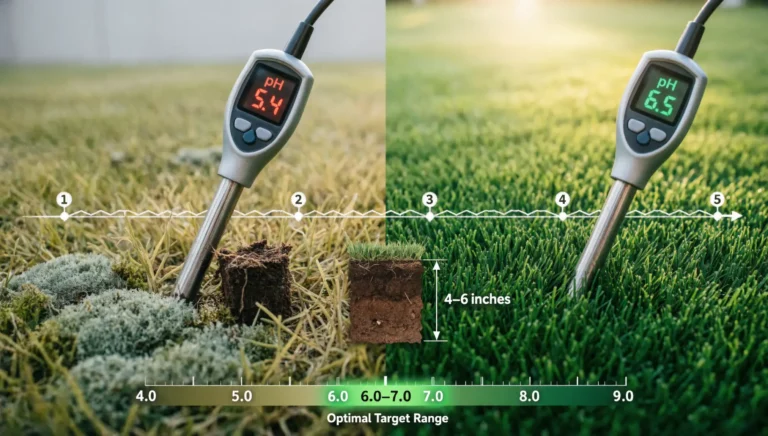
Most lawn grasses, from Kentucky Bluegrass to Bermuda, perform best between 6.0 and 7.0. A telltale visual sign that your lawn’s reaction has gone too acidic is a heavy moss invasion. Moss thrives in the exact conditions where turfgrass quits. If your fertilizer applications seem to stop working and the grass looks pale despite adequate nitrogen, the pH gate is likely closed.
Why Does the pH of the Soil Change Over Time?
Soil reaction is not a static number; it is a dynamic, living metric that changes over time due to environmental and management factors. Understanding why it shifts helps you predict and prevent future problems.
The most common cause of dropping pH (increasing acidity) is natural rainfall. As rainwater percolates through the soil profile, it leaches away basic cations like calcium, magnesium, and potassium, replacing them with acidic hydrogen and aluminum ions. This is why soils in high-rainfall regions are naturally more acidic than soils in arid regions. Additionally, the continuous application of ammonium-based nitrogen fertilizers, the decomposition of organic matter, and the removal of crop harvests all gradually drive the pH downward over the years.
Conversely, soil can become more alkaline over time if you are irrigating with well water that is high in dissolved calcium carbonate (bicarbonates). In arid regions where rainfall is insufficient to leach these salts out of the soil profile, alkaline conditions naturally accumulate.
How to Properly Test Your Soil Reaction
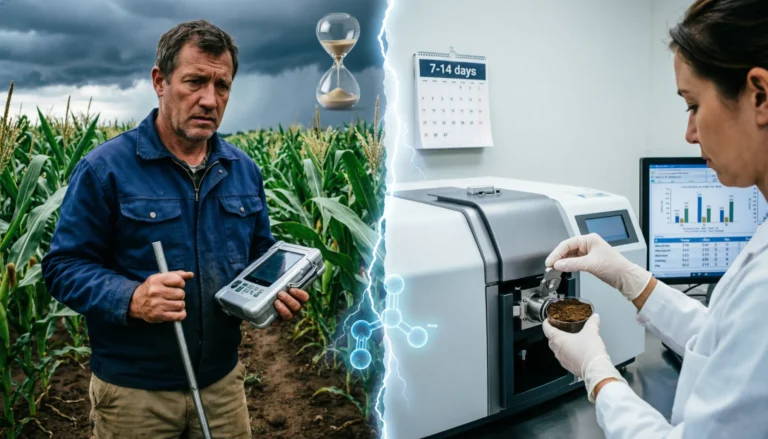
You cannot manage what you do not measure. Inexpensive dye-test kits and digital meters give a reliable ballpark figure for home gardeners, while a professional lab test delivers precise pH, buffer capacity, and exact amendment recommendations.
To get an accurate reading, you must sample correctly. Do not just scrape the top inch of dirt. Use a clean soil probe or trowel to extract cores from a depth of 4 to 6 inches for garden beds, or 3 to 4 inches for established lawns. Take at least 5 to 10 random cores across the area, mix them together in a clean plastic bucket, and remove any thatch, mulch, or large roots. Let the mixed sample dry in the shade before testing. Always test in early spring or late fall, and retest every two to three years, or annually if you are actively trying to correct a severe imbalance.
How to Adjust Your Soil Reaction Safely
Raising pH: Fixing Soil That Is Too Acidic
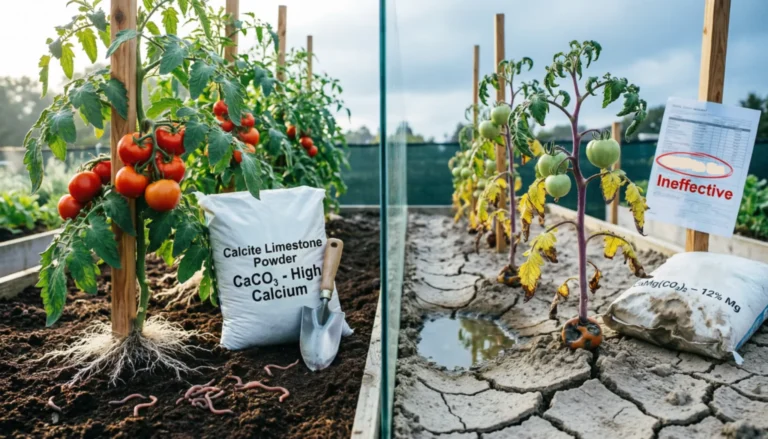
The standard, most effective remedy for acidic soil is agricultural limestone. Finer lime powders act much faster than coarse granules, but moisture is absolutely required for the chemical reaction to occur in the soil. Full neutralization takes months, not days. It is also vital to understand that clay and organic-rich soils resist chemical change. They have a high “buffer capacity” and require significantly more lime to shift the pH than light, sandy soils do.
Lowering pH: Fixing Soil That Is Too Alkaline
Elemental sulfur is the gold standard for lowering pH. Soil bacteria must oxidize the sulfur into sulfuric acid to drive the reaction downward, which is why this process also takes several months and requires warm, moist soil to activate the microbes. Aluminum sulfate can work almost instantly, but it carries a high risk of salt burn and aluminum toxicity if over-applied. Incorporating acidic organic matter like sphagnum peat moss helps in individual planting holes, but in truly alkaline regions, lowering the pH of native soil permanently is a losing battle. In those cases, choose alkaline-tolerant plants or rely on raised beds and containers for your acid-loving species.
Whichever direction you adjust, always change the reaction gradually and retest. Chasing the perfect number with heavy, single applications of amendments is how well-meaning gardeners accidentally swing their soil from one extreme lockout zone straight into another.
Key Takeaways
- Soil reaction is simply soil pH. It is the classic scientific term for how acidic or alkaline your ground is, and it dictates the entire chemical environment of your garden.
- The scale is logarithmic: a single one-unit drop in pH represents a tenfold increase in acidity, drastically changing nutrient availability.
- Most landscape plants and vegetables peak between pH 6.0 and 7.5. Blueberries demand acidic conditions (4.5 to 5.5), while asparagus tolerates neutral to slightly alkaline zones.
- The true significance of soil pH lies in its control over nutrient lockout, aluminum toxicity, and the shutdown of beneficial soil microbes.
- Always test your soil properly before amending. Lime raises pH safely, while elemental sulfur lowers it, but both require time, moisture, and microbial activity to work.
Your plants have been trying to tell you about the soil reaction all along, through yellowing leaves, mossy lawns, stunted roots, and fruitless bushes. Now you possess the knowledge to read the message, check the scale, and finally give every single plant in your garden the exact chemical zone it was born to thrive in.
Sources and Further Reading
- USDA Natural Resources Conservation Service: Soil Health and pH Guide (Reaction classes and crop yield data)
- Oregon State University Extension: Living on the Land: Managing Soil pH
- SUNY College of Environmental Science and Forestry: Soil pH: What It Means
- Purdue University Extension: A Homeowner’s Guide to Soil pH
- Clemson University Home and Garden Information Center: Changing the pH of Your Soil
- Michigan State University Extension: Soil pH and Aluminum Toxicity