Choosing between calcitic vs. dolomitic limestone feels like a trivial purchase decision, until your clay beds harden into concrete and potassium readings on your next soil test crater. That’s the exact failure pattern our team sees every growing season.
You bought a bag of lime to fix acidic soil. Six months later, tomatoes are stunted, beds stay waterlogged, and root zones suffocate. The most common mistake we see isn’t skipping the lime, it’s choosing the wrong type.
Calcitic limestone and dolomitic limestone both raise soil pH, yet they deliver fundamentally different mineral packages. Pick the wrong one for your existing soil chemistry, and you trigger nutrient lockout, destroy soil structure, and create compaction that takes years to reverse.
This guide hands you the chemical formulas, the dangers supplier blogs skip, and a step-by-step decision matrix tied to your actual soil test numbers. By the end, you’ll know exactly which bag to buy and why.
The Short Answer: Calcitic vs. Dolomitic Limestone
In the calcitic vs. dolomitic limestone debate, the primary difference is mineral composition. Calcitic limestone is primarily calcium carbonate (CaCO₃) used to raise soil pH and add calcium. Dolomitic limestone contains both calcium and magnesium carbonates (CaMg(CO₃)₂) and is used specifically when a soil test confirms a magnesium deficiency.
| Feature | Calcitic Limestone | Dolomitic Limestone |
|---|---|---|
| Primary Compound | Calcium carbonate (CaCO₃) | Calcium magnesium carbonate (CaMg(CO₃)₂) |
| Calcium Content | ~38–40% Ca | ~22–26% Ca |
| Magnesium Content | ≤ 2–5% Mg | ~10–13% Mg |
| Best Used When | Soil Mg is adequate or high | Soil test confirms Mg deficiency |
| Dissolution Speed | Slightly faster short-term | Slightly slower; Mg fraction dissolves gradually |
| Risk if Misapplied | Minor (limited Mg addition) | High in Mg-rich clay: compaction, nutrient lockout |
If you remember only one rule, make it this: never add dolomitic lime to soil that already tests high in magnesium. The sections below show you exactly how to check your numbers before you spend a dime.
First, a quick prerequisite. Your results only make sense once you understand how soil pH interacts with Cation Exchange Capacity (CEC), so review our soil pH fundamentals guide before going deeper.
Chemical Formulas & Composition: CaCO₃ vs. CaMg(CO₃)₂ Explained
Calcitic Limestone Formula
CaCO₃ , Calcium Carbonate
Primarily supplies calcium ions (Ca²⁺) to the soil solution. Raises soil pH by neutralizing hydrogen ions on Cation Exchange Capacity (CEC) sites.
A calcitic limestone is a soil amendment composed primarily of calcium carbonate. It is primarily used to raise pH in acidic soil, and it differs from dolomitic limestone because it supplies little to no magnesium carbonate.
Dolomitic Limestone Formula
CaMg(CO₃)₂ , Calcium Magnesium Carbonate
Supplies both calcium ions (Ca²⁺) and magnesium ions (Mg²⁺). Raises pH while simultaneously amending magnesium carbonate into the soil profile.
A dolomitic limestone is a ground rock product composed of the mineral dolomite, calcium magnesium carbonate. It is primarily used to raise pH while correcting a magnesium deficiency, and it differs from calcitic limestone because it supplies 10–13% magnesium.
Both products fall under the broader agricultural lime category, and both derive from ground limestone rock. The critical distinction is the magnesium fraction locked inside the dolomite mineral itself.
According to USDA NRCS agricultural lime composition standards, dolomitic limestone typically carries 10–13% elemental magnesium, while calcitic limestone holds 2% or less. That gap looks small on a bag label, yet it drives everything downstream.
In a high-CEC clay soil, those extra Mg²⁺ ions accumulate on cation exchange sites season after season. However, that slow accumulation is precisely where the trouble begins.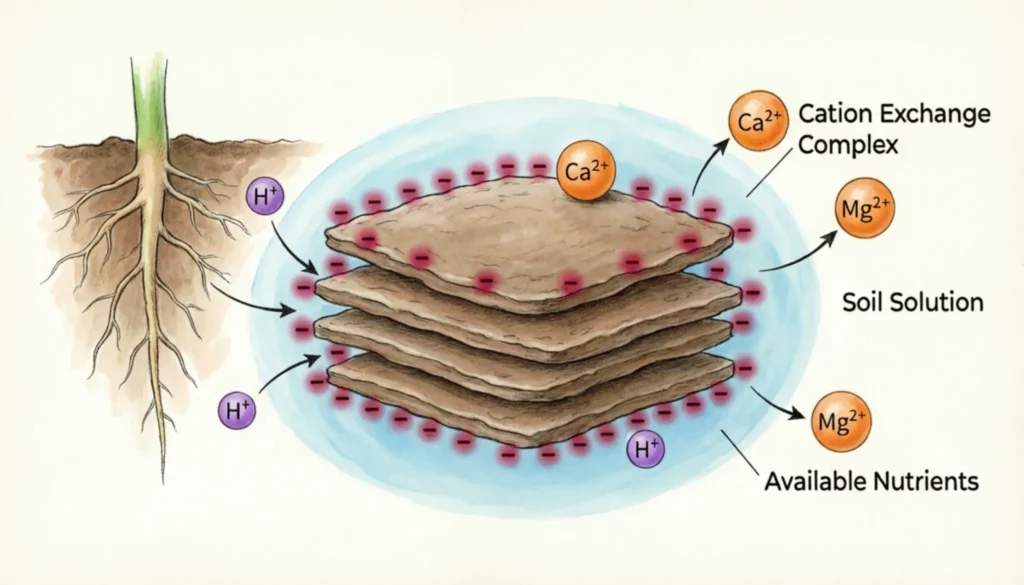
The Hidden Danger: Why the Wrong Lime Triggers Nutrient Lockout
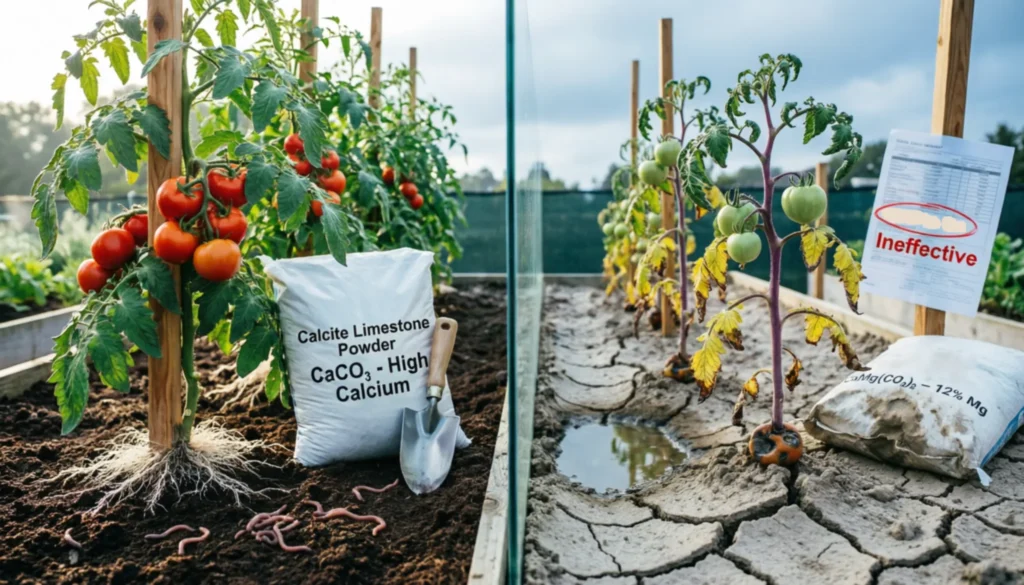
Most supplier blogs stop at “calcitic adds calcium, dolomitic adds magnesium.” However, what they omit is the real risk: excess magnesium in heavy clay soils tightens soil structure, reduces flocculation, and locks out calcium and potassium.
When Mg²⁺ saturates too many exchange sites, clay platelets disperse instead of clumping into stable aggregates. As a result, you get poor tilth, waterlogged beds, and root zones that suffocate.
We’ve watched growers in heavy clay regions apply dolomitic lime for three straight seasons simply because pH still read low, without ever checking that magnesium base saturation percentage had already climbed past 20%. By the fourth year, their soil turned brick-hard.
⚠️ THE MAGNESIUM DANGER ZONE: If your soil test shows magnesium base saturation above 15–20%, adding dolomitic lime will worsen compaction and accelerate nutrient lockout. Switch to calcitic lime immediately.
How the Calcium-Magnesium Antagonism Locks Out Nutrients
Calcium, magnesium, and potassium compete for the same uptake pathways in plant roots, which is why agronomists call them antagonistic nutrients. When one cation dominates the soil solution, the others get crowded out.
Most crops perform best with a calcium-to-magnesium ratio between 3:1 and 7:1, per university extension data on ideal Ca:Mg ratios.
Skew that ratio, and you see interveinal chlorosis, weak stems, or blossom-end rot that never responds to foliar calcium sprays.
The fix is never “add more of the missing nutrient.” Instead, correct the ratio at the soil level, which is exactly why your lime choice matters.
How to Choose: The Soil Test Decision Matrix for Lime Selection
This is the section competitor articles skip, and it is the entire point of the guide. Here is the actionable framework we use.
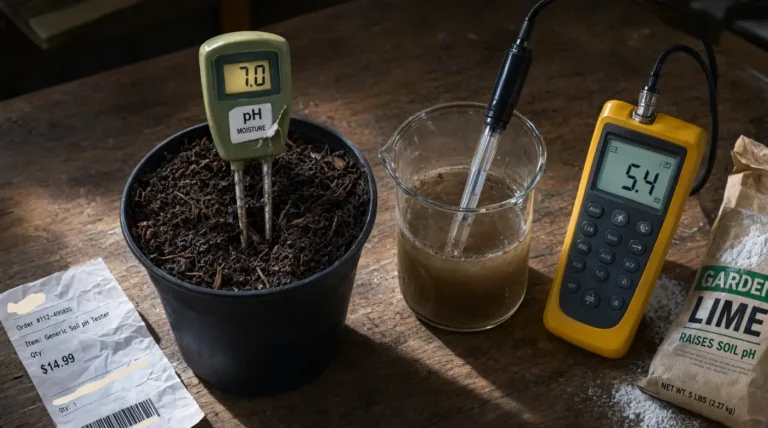
- Step 1 – Get a full-panel soil test. You need pH, CEC, and base saturation percentages for calcium, magnesium, and potassium. A pH-only strip test is not enough, so order a proper panel through our recommended soil test kits guide.
- Step 2 – Locate your Ca:Mg ratio and magnesium base saturation on the report. Both numbers usually sit side by side in the exchangeable cations table.
- Step 3 – Match your numbers to the matrix below.
| Your Soil Test Result | Lime to Buy | Why |
|---|---|---|
| Ca:Mg ratio > 7:1 AND Mg base saturation < 8% | Dolomitic limestone | Soil is genuinely Mg-deficient. Dolomitic lime corrects pH and replenishes Mg. |
| Ca:Mg ratio 3:1 – 7:1 AND Mg base saturation 8–15% | Calcitic limestone | Mg is adequate. Calcitic lime raises pH without oversupplying Mg. |
| Ca:Mg ratio < 3:1 OR Mg base saturation > 15–20% | Calcitic limestone ONLY | ⚠️ Magnesium Danger Zone. Dolomitic lime will cause compaction and lockout. |
| pH already ≥ 7.0 | Neither | Lime is unnecessary. Re-test in 12 months. |
- Step 4 – Calculate your application rate from the CEC and target pH columns, because lime requirement follows your soil’s buffering capacity, not just its current pH. Most extension services publish a pounds-per-1,000-sq-ft conversion, such as this state extension lime rate calculator.
Clearing the Confusion: Garden Lime vs. Dolomite vs. Hydrated Lime
The garden center aisle deliberately muddies the terminology. Here is the quick decode:
- Garden lime / Agricultural lime: Almost always calcitic limestone (CaCO₃). This is the default product at hardware stores, and it is not dolomite lime.
- Dolomite lime / Dolomitic limestone: Contains calcium magnesium carbonate (CaMg(CO₃)₂). Sold specifically for magnesium-deficient soils.
- Hydrated lime (calcium hydroxide, Ca(OH)₂): A caustic, fast-acting industrial product. It is primarily used in construction and differs from agricultural lime because it can burn roots and spike pH violently. Do not apply hydrated lime to garden beds.
- Pelletized lime: Calcitic or dolomitic limestone compressed into granules for easier spreading. Same chemistry, different form factor.
If a bag simply says “garden lime,” read the guaranteed analysis on the back. Magnesium content below 5% means you are holding calcitic lime.
Beyond that, check the effective neutralizing value (ENVE) on the label while you’re there. This number tells you how much acidity the product actually neutralizes relative to pure calcium carbonate.
Lime Application Best Practices: Timing, Depth, and Format
- Timing: Apply lime in fall or early winter. It needs 3–6 months to react with the soil before spring planting.
- Incorporation: Till or rake powdered lime into the top 6–8 inches of soil. Surface-only application on established beds works but acts slower.
- Pelletized vs. powdered: Pelletized lime spreads evenly with a broadcast spreader. Powdered lime reacts slightly faster because of greater surface area. Either works at the correct rate.
- Moisture matters: Water the area lightly after application to begin the dissolution process. Dry lime sits inert on the surface.
- Re-test annually: Especially in high-rainfall regions where calcium and magnesium leach from the profile. Track your base saturation percentage year over year to catch drift early.
- Never combine lime with ammonium-based fertilizers in the same application. The reaction releases ammonia gas and wastes nitrogen.
Key Takeaways: Choosing the Right Lime for Acidic Soil
- Calcitic limestone (CaCO₃) supplies calcium; dolomitic limestone (CaMg(CO₃)₂) supplies calcium and magnesium. Your soil test dictates which one you need.
- The calcium-to-magnesium ratio and magnesium base saturation percentage are the two numbers that drive the decision. Ignore them and you guess.
- Adding dolomitic lime to soil already above 15–20% Mg base saturation triggers the Magnesium Danger Zone: compaction, poor flocculation, and nutrient lockout.
- Always order a full-panel soil test with CEC data, not just a pH strip, before purchasing lime.
- Apply in fall, incorporate to 6–8 inches, and re-test annually.
Choosing between calcitic vs. dolomitic limestone isn’t a matter of preference, it’s a chemistry decision. Get the numbers right, and your soil structure, nutrient availability, and crop health reward you for years.