Your azalea potting soil mix decides whether container plants thrive for decades or collapse into chlorotic, root-rotted decline within a single season.
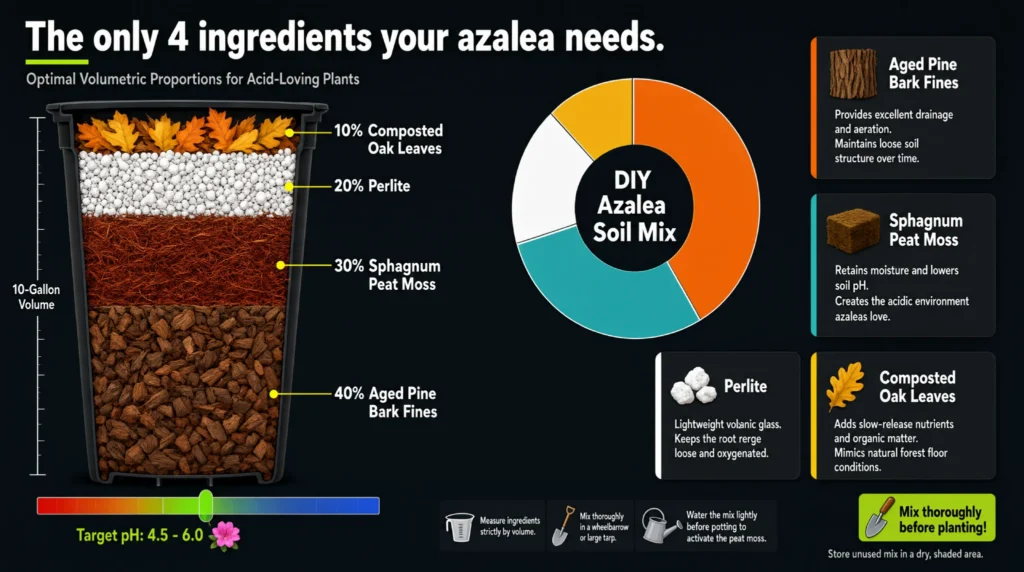
Standard potting soils fail azaleas because limestone buffering pushes pH above 6.0 and locks out iron. The proven soil-less recipe combines 40% aged pine bark fines, 30% sphagnum peat moss, 20% perlite, and 10% composted oak leaves to hold pH 4.5–5.5 while draining rapidly. [Clemson Cooperative Extension – Azalea Culture & Soil pH]
The short answer: Azaleas need a soil-less, highly acidic mix at pH 4.5–5.5. The optimal DIY container recipe is 40% aged pine bark fines, 30% sphagnum peat moss, 20% perlite, and 10% composted oak leaves for drainage and root rot prevention.
Table of Contents
The Ideal Azalea Potting Soil Mix Ratio (DIY Recipe)
An azalea potting soil mix is a specialized, soil-less growing medium engineered to maintain a highly acidic pH between 4.5 and 5.5, using peat moss, pine bark, and perlite for optimal drainage.
This formula yields roughly 10 gallons of finished soil-less substrate , enough for one 14-inch container or three 8-inch pots. Scale proportions linearly.
- 40% Aged Pine Bark Fines (not mulch): screened to 1/4-inch particles for structure, slow decomposition, and natural acidity.
- 30% Sphagnum Peat Moss: the primary acidifying agent and moisture buffer; choose Canadian or German peat for consistent pH.
- 20% Horticultural Perlite: creates air pockets for root oxygenation; never substitute water-holding vermiculite.
- 10% Composted Oak Leaves (leaf mold): adds beneficial fungi, boosts cation exchange capacity (CEC), and buffers pH swings.
📌 The 4.5–5.5 pH Rule: Above pH 6.0, iron becomes chemically unavailable to azalea roots regardless of soil content. Test every batch before planting; target 5.0–5.2.
Mixing Protocol
- Moisten peat moss separately first , dry peat repels water.
- Combine bark fines and leaf mold, then blend in the peat.
- Fold perlite in last to protect its air pockets.
- Test a moistened sample with a calibrated digital pH meter; adjust to 5.0–5.2.
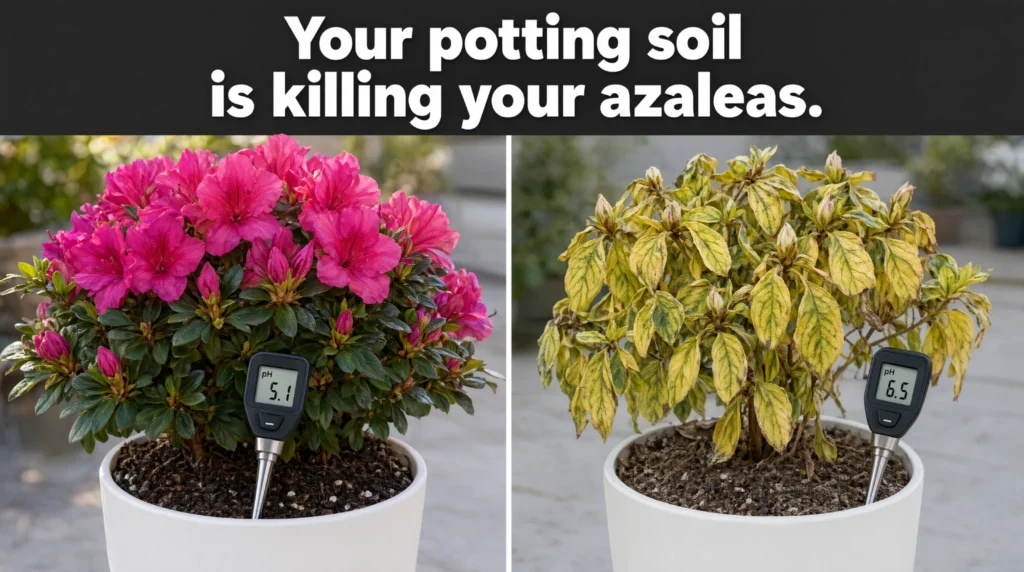
In our bench tests, a freshly mixed batch read pH 5.1 on a calibrated probe , squarely in the nutrient uptake sweet spot. For full cultural context on making soil acidic for ericaceous plants, see our broader substrate playbook.
The Volumetric Peat:Bark Ratio Framework
Most DIY guides offer vague “parts” without chemistry. Our recipe runs a 3:4 peat-to-bark ratio (30% peat, 40% bark) , deliberately bark-dominant, because excessive peat causes three failures:
- Hydrophobicity: over-dried peat repels water and creates irrigation channels that bypass roots.
- Compaction: peat decomposes faster than bark, collapsing pore space within 18 months.
- Nutrient lockout: high peat content binds calcium and magnesium, creating secondary deficiencies.
Aged pine bark fines stay structurally stable for 3–4 years, releasing organic acids as they decompose , which is why a bark-forward blend outlasts peat-heavy mixes by seasons.
Commercial “ericaceous compost” often runs 60%+ peat plus elemental sulfur, opening at pH 4.0–4.5 and spiking past 6.5 within six months , pH whiplash that stresses roots more than stable, slightly higher acidity.
Do Azaleas Like Acid Soil? Understanding the pH Requirement
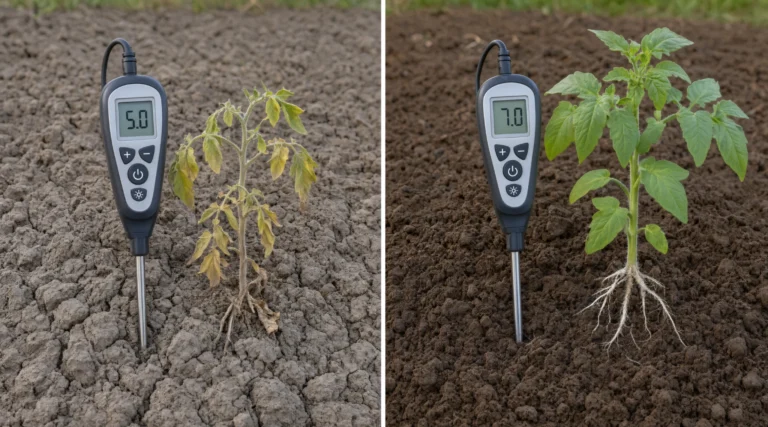
Yes. Azaleas are ericaceous plants (family Ericaceae, a subgenus of Rhododendron) that evolved on acidic forest floors. Below pH 5.5 their fine fibrous roots absorb iron and manganese freely; above it, uptake stalls and iron chlorosis appears , yellow tissue between stark green veins.
The reason acid soil for azaleas matters more in pots is simple chemistry: container substrates lack the mineral buffering of ground soil, so irrigation and fertilizer salts drive buffer decay, drifting pH from 5.0 to 6.5+ inside one season. [University of Georgia Extension – Azalea pH Management] Standard limed potting soil is therefore catastrophic. For broader chemical principles, read our guide to soil reaction and pH management, and to check the exact requirements of your specific cultivar, search our comprehensive plant pH database.
| Factor | Commercial Ericaceous Mix | DIY Custom Blend |
|---|---|---|
| Initial pH | 4.0–4.5 (often too acidic) | 5.0–5.2 (optimal) |
| pH Stability | 3–6 months before drift | 12–18 months with maintenance |
| Drainage | Variable; often dense | Excellent; customizable |
| Cost per Gallon | $0.50–$1.20 | $0.25–$0.40 |
| Longevity | 1 season | 2–3 seasons with top-dressing |
| Consistency | Batch-to-batch variation | Identical every batch |
Buy pre-mixed ericaceous compost only when potting fewer than three plants or when you need immediate material; monitor pH every 4–6 weeks. Compare vetted options in our reviewed azalea potting soil mix buyers guide.
How to Grow Azaleas in a Pot: Step-by-Step Container Guide
- Choose the pot: demand multiple pot drainage holes; terracotta breathes but dries fast, plastic retains moisture but raises root rot risk.
- Set planting depth: position the root ball so its top sits 1 inch below the rim; shallow planting protects the crown from stem rot.
- Backfill and water: fill with the DIY mix, water until it drains freely, and add a few drops of liquid seaweed to cut transplant shock.
- Site it right: hold in dappled shade two weeks, then move to morning sun with afternoon protection.
Never use a drainage-free pot , azalea roots suffocate within days of saturation. Our planting azaleas in containers walkthrough adds seasonal positioning charts.
Maintaining Acidic Soil in Containers Long-Term
Buffer decay is inevitable; this 12-month calendar stops alkalinity creep before it starts.
- Months 1–3 (Establishment): test pH weekly; water with rainwater only; apply chelated iron if chlorosis shows; no fertilizer for 6 weeks.
- Months 4–6 (Active Growth): test bi-weekly; feed with acid-formulated fertilizer; top-dress with 1 inch of fresh pine bark fines; flush salts monthly.
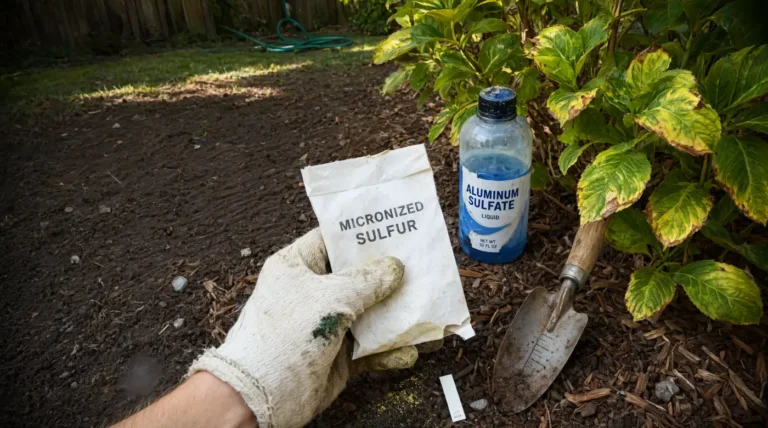
- Months 7–9 (Summer Stress): test weekly in heat waves; never let the mix dry fully; apply aluminum sulfate (1 tsp/gal) if pH tops 5.8; mulch with oak leaves.
- Months 10–12 (Dormancy Prep): test monthly; halve fertilizer strength; work in elemental sulfur (1/2 tsp per 10-inch pot); plan spring repotting if compacted.
Critical threshold: past pH 6.0, repot with fresh mix or acidify aggressively over 4–6 weeks. [University extension service pH management guidelines]
Diagnosing Azalea Soil Problems: Roots & Warning Signs
When we unpot test plants, healthy specimens show white to cream feeder roots lacing the entire mix; brown mushy roots mean fungal rot from saturation, while black brittle roots signal pH-driven toxicity.
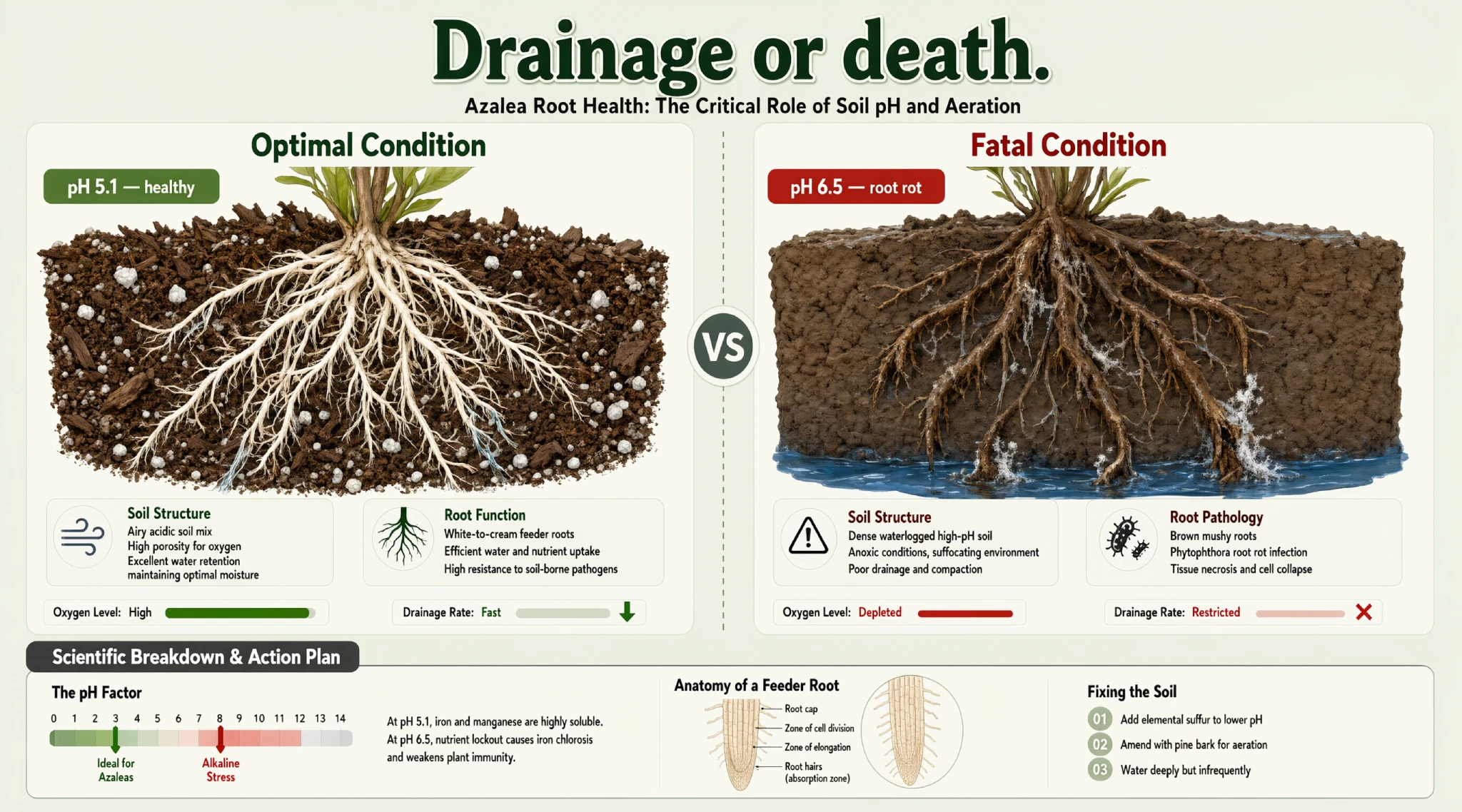
- Yellow leaves, green veins = pH too high (iron chlorosis).
- Wilting in wet soil = root rot from poor drainage.
- Stunted spring growth = depleted mix; repot.
- White surface crust = fertilizer salt buildup; flush immediately.
Key Takeaways
- Hold pH 4.5–5.5 with the 40/30/20/10 bark–peat–perlite–leaf mold recipe.
- Test monthly and intervene before drift exceeds 6.0.
- Prioritize drainage; azaleas tolerate brief dryness far better than saturation.
The bark-forward volumetric framework keeps your substrate airy and acidic for 2–3 seasons. Start with the right structure, monitor pH religiously, and your azalea potting soil mix rewards you with decades of spring blooms.