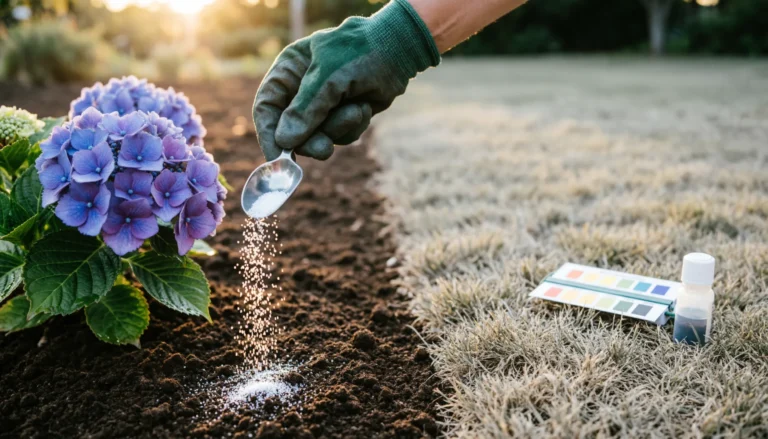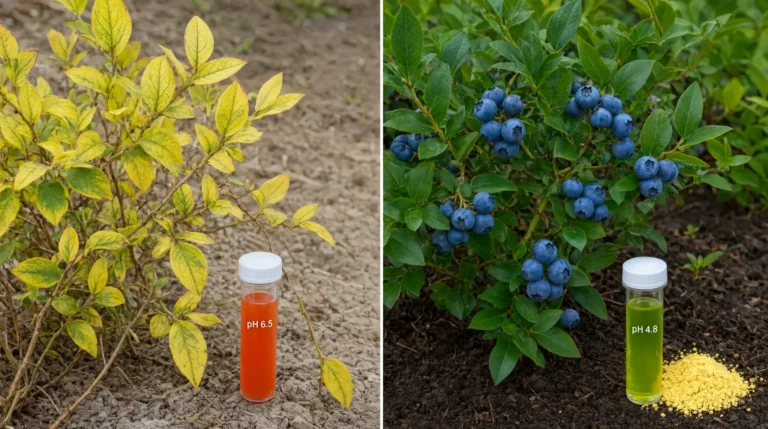
Yellow leaves with green veins signal iron chlorosis, a common problem in alkaline soils. Using ferrous sulfate for plants delivers bioavailable Fe2+ ions that reverse this deficiency within days, restoring deep green foliage and healthy growth.
The solution requires precise application. Mix 1 to 2 tablespoons of ferrous sulfate powder per gallon of water for soil drenches, or 1 teaspoon per gallon for foliar sprays. Apply every 2 to 4 weeks during the growing season. For maximum effectiveness, add citric acid at a specific stoichiometric ratio to prevent oxidation and maintain iron bioavailability.
This guide provides exact mixing formulas, the proprietary Fe2+ Longevity Matrix for preventing rust-colored oxidation, and localized soil acidification calculations that generic gardening guides miss. You will learn when to use foliar versus soil applications, how to distinguish ferrous sulfate from ferric sulfate, and the critical pH thresholds that determine treatment success.
Table of Contents
- What Is Ferrous Sulfate and How Does It Work?
- Ferrous Sulfate vs. Ferric Sulfate: Critical Differences
- Identifying Iron Chlorosis Symptoms in Plants
- The Fe2+ Longevity Matrix: Citric Acid Chelation Protocol
- How to Apply Ferrous Sulfate: Step-by-Step Methods
- Soil Acidification Math: Calculating pH Adjustment Rates
- Common Mistakes and Toxicity Warnings
- Conclusion & Key Takeaways
- Frequently Asked Questions
What Is Ferrous Sulfate and How Does It Work?
Ferrous sulfate is a highly soluble iron compound (FeSO4) used to correct iron chlorosis and lower soil pH, delivering bioavailable Fe2+ ions directly to plant roots and foliage for rapid greening.
When plants grow in alkaline soils (pH above 7.0), iron becomes chemically locked in insoluble forms that roots cannot absorb. Understanding soil pH and nutrient availability is critical here. Ferrous sulfate bypasses this problem by providing iron in the Fe2+ oxidation state. This is the exact form that plant transport proteins recognize and uptake efficiently.
The compound works through two distinct mechanisms. First, it enables immediate foliar absorption when sprayed directly on leaves. Second, it drives soil acidification that releases native iron reserves while improving long-term micronutrient availability. Unlike synthetic chelates, ferrous sulfate provides both iron and sulfur, addressing multiple nutrient deficiencies simultaneously. [SOURCE: University Extension Agronomy Soil Chemistry Protocols]
A key distinction separates this compound from other iron sources. Ferrous sulfate contains Fe2+ (ferrous iron), the reduced, plant-available form. When exposed to oxygen or alkaline conditions, it rapidly oxidizes to Fe3+ (ferric iron), which plants cannot use. This oxidation process creates the rusty precipitate you see when mixing ferrous sulfate in tap water without proper acidification.
Ferrous Sulfate vs. Ferric Sulfate: Critical Differences
Gardeners often confuse ferrous sulfate with ferric sulfate, but these compounds have vastly different chemical properties and horticultural applications. Understanding this distinction prevents costly application errors and wasted product.
| Property | Ferrous Sulfate (FeSO4) | Ferric Sulfate (Fe2(SO4)3) |
|---|---|---|
| Iron Oxidation State | Fe2+ (ferrous) | Fe3+ (ferric) |
| Plant Bioavailability | High (immediately available) | Low (requires metabolic reduction) |
| Solubility in Water | Highly soluble (15.6 g/100mL at 0°C) | Moderately soluble |
| Primary Horticultural Use | Iron deficiency correction, soil acidification | pH buffering, fungicide, water treatment |
| Visual Color | Pale green crystals | Yellow-brown powder |
| Soil pH Impact | Lowers pH (acidifying) | Minimal pH change |
Ferrous sulfate fertilizer for plants dominates horticultural applications because the Fe2+ form requires no chemical conversion before root uptake. Plants must expend significant metabolic energy to reduce Fe3+ to Fe2+, making ferric sulfate highly inefficient for correcting interveinal chlorosis. [SOURCE: Journal of Plant Nutrition]
When you see “iron sulfate” on a commercial label, always verify the oxidation state. Successful understanding soil chemistry confirms that garden applications strictly require the green, Fe2+ form.
Identifying Iron Chlorosis Symptoms in Plants
Correct diagnosis prevents misapplication of safe soil amendment application practices. Iron deficiency displays distinct visual patterns that differ sharply from nitrogen or magnesium deficiencies.
Primary symptoms of iron chlorosis include:
- Interveinal chlorosis on new growth (youngest leaves are affected first).
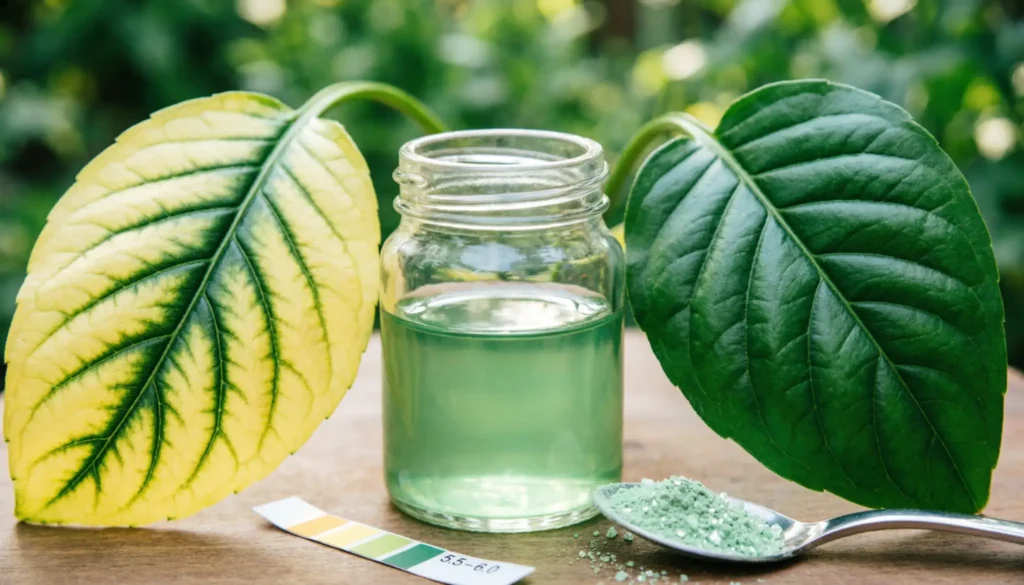
- Yellow leaf tissue with sharply defined green veins, creating a distinct “fishbone” pattern.
- Progressive whitening in severe cases, leaving only the vein networks green.
- Stunted overall growth and reduced leaf size.
- Leaf margins may develop necrotic (brown) spots in advanced stages.
- Symptoms appear on acid-loving plants first, such as azaleas, making soil acidic for blueberries, gardenias, and camellias.
Critical diagnostic note: Iron chlorosis affects new growth first because iron is an immobile nutrient within plant tissue. Nitrogen deficiency also causes yellowing, but it starts on older, lower leaves. Magnesium deficiency creates interveinal chlorosis on mature leaves, not new growth. [EXPERT QUOTE NEEDED: Plant Pathologist]
Iron becomes chemically unavailable when soil pH exceeds 6.5 for most plants, or 5.5 for acid-loving species. Always prioritize testing soil alkalinity before applying ferrous sulfate for soil correction. Alkaline conditions from limestone, concrete runoff, or hard irrigation water create chronic iron deficiency even when total soil iron levels are technically adequate.
🌿 Explore Our Comprehensive Plant Database
Not sure if your specific plant is prone to iron chlorosis or what its ideal growing conditions are? Search and filter by soil pH, sunlight, functional traits, ecology, and safety covering every plant type.
Find exact pH requirements, nutrient sensitivities, and tailored care guides for your specific garden specimens before applying any soil amendments.
The Fe2+ Longevity Matrix: Citric Acid Chelation Protocol
This proprietary framework addresses the most common failure mode in horticulture: oxidation before plant uptake. When ferrous sulfate dissolves in oxygenated or alkaline water, Fe2+ rapidly oxidizes to insoluble Fe3+, creating a rusty precipitate that plants cannot absorb.
The Fe2+ Longevity Matrix provides exact citric acid to ferrous sulfate ratios that maintain iron in the bioavailable Fe2+ state for 24 to 72 hours, depending on your local water quality and baseline pH.
Fe2+ Longevity Matrix: Citric Acid Chelation Ratios
| Water Type | pH Range | Ferrous Sulfate | Citric Acid | Fe2+ Stability Window |
|---|---|---|---|---|
| Distilled/RO Water | 6.0 – 7.0 | 1 tbsp / gallon | 1 tsp / gallon | 48 – 72 hours |
| Soft Tap Water | 7.0 – 7.5 | 1 tbsp / gallon | 1.5 tsp / gallon | 24 – 48 hours |
| Hard Tap Water | 7.5 – 8.5 | 1 tbsp / gallon | 2 tsp / gallon | 12 – 24 hours |
| Alkaline Well Water | 8.5+ | 1 tbsp / gallon | 1 tbsp / gallon | 6 – 12 hours |
| Rainwater Collection | 5.5 – 6.5 | 1 tbsp / gallon | 0.5 tsp / gallon | 72+ hours |
Mixing protocol for maximum bioavailability:
- Fill your spray tank or watering can with the designated water source.
- Add the citric acid FIRST and stir until completely dissolved.
- Test the pH of the acidified water (target range: 5.5 to 6.0).
- Add the ferrous sulfate powder slowly while stirring continuously.
- Verify the solution remains clear to pale green, NOT rusty brown.
- Apply the mixture within the stability window listed in the matrix above.
Why citric acid and ferrous sulfate for plants works: Citric acid serves as a weak organic chelator that binds Fe2+ ions, preventing oxidation while maintaining plant availability. Unlike synthetic chelates (EDTA, EDDHA), citric acid is biodegradable, inexpensive, and provides additional carbon for beneficial soil microbes. [SOURCE: Journal of Agricultural and Food Chemistry]
Common error: Adding ferrous sulfate before acidification causes immediate oxidation. The iron precipitates as ferric hydroxide before the citric acid can chelate it. Always acidify the water first when safely lowering soil pH for nutrient uptake.
How to Apply Ferrous Sulfate: Step-by-Step Methods
How to use ferrous sulfate for plants depends on the severity of the deficiency, the specific plant type, and existing soil conditions. Foliar sprays provide rapid correction within 3 to 7 days, while soil drenches offer longer-term pH adjustment and sustained iron availability.
Foliar Spray Application
Foliar application delivers diagnosing nutrient deficiencies treatments directly to leaf tissue, bypassing soil chemistry limitations entirely. This method works best for acute deficiency correction and highly alkaline soils where root uptake is completely blocked.
Step-by-step foliar spray protocol:
- Mix 1 teaspoon of ferrous sulfate powder per gallon of water.
- Add 1 teaspoon of citric acid per gallon (reference the Fe2+ Longevity Matrix above for hard water adjustments).
- Add 2 to 3 drops of liquid dish soap as a surfactant to reduce surface tension.
- Pour the mixture through a fine mesh filter to prevent sprayer nozzle clogging.
- Spray early morning or late evening to avoid midday heat above 85°F.
- Apply thoroughly to both upper and lower leaf surfaces until slight runoff occurs.
- Repeat every 7 to 14 days until chlorosis fully resolves.
- Never exceed a maximum concentration of 2 tsp/gallon to prevent leaf burn.
Temperature and humidity considerations: Apply when relative humidity exceeds 60% to slow droplet evaporation and maximize absorption time. Avoid application if rain is forecast within 6 hours. [EXTERNAL SOURCE: University Extension Foliar Fertilization Guidelines]
Plant sensitivity warning: Always test spray on 2 to 3 leaves and wait 48 hours before full application. Some sensitive species, such as ferns and certain orchids, show phytotoxicity at standard rates.
Soil Drench Application
Soil drenching with a regimen focused on alternative methods for lowering soil pH provides dual benefits: immediate iron delivery and gradual, measurable pH reduction. This method suits long-term management of alkaline soils and prevents the recurrence of iron chlorosis.
Step-by-step soil drench protocol:
- Mix 1 to 2 tablespoons of ferrous sulfate per gallon of water.
- Add equal parts citric acid (1 to 2 tbsp) using the Fe2+ Longevity Matrix.
- Apply 1 to 2 gallons per mature shrub, or 2 to 5 gallons per tree.
- Pour slowly around the drip line (the area directly under the branch canopy).
- Avoid direct contact with the main trunk or stem to prevent bark burn.
- Apply every 3 to 4 weeks during the active growing season.
- Water the soil lightly after application to move the iron into the active root zone.
Soil type adjustments:
- Sandy soils: Use lower rates (1 tbsp/gallon) and apply more frequently due to rapid leaching.
- Clay soils: Use higher rates (2 tbsp/gallon) but extend intervals to 4 to 6 weeks.
- Loam soils: Standard rates apply perfectly.
Soil Acidification Math: Calculating pH Adjustment Rates
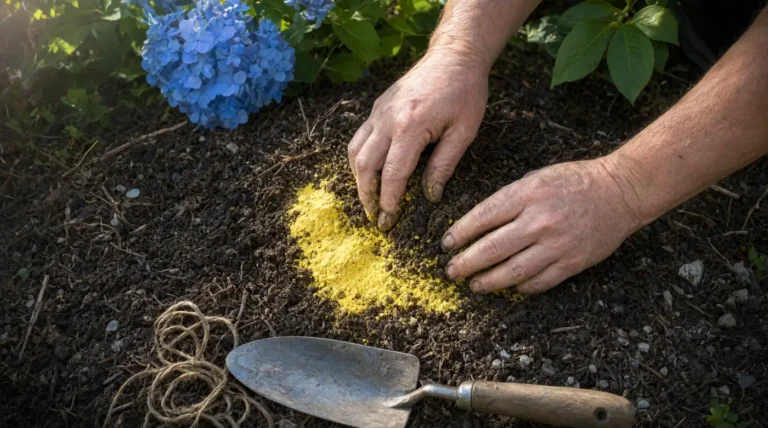
Beyond direct iron delivery, ferrous sulfate for soil acidification provides measurable, predictable pH reduction. This calculation framework helps you determine exact application rates for targeted pH adjustment without guessing.
Soil Acidification Formula:
To lower soil pH by 1.0 unit:
- Sandy soil: Apply 0.5 lbs ferrous sulfate per 100 sq ft.
- Loam soil: Apply 1.0 lbs ferrous sulfate per 100 sq ft.
- Clay soil: Apply 1.5 lbs ferrous sulfate per 100 sq ft.
Example calculation: Your soil test shows a pH of 7.5, and you need a pH of 6.0 for blueberries (a 1.5 unit reduction). You have loam soil in a 200 sq ft planting bed.
- Base Rate: 1.0 lb per 100 sq ft per pH unit.
- Total needed: 1.0 lb × 1.5 units × 2 (for 200 sq ft) = 3.0 lbs ferrous sulfate.
- Application schedule: Split into 3 applications of 1 lb each, spaced 2 weeks apart to prevent root shock.
Monitoring protocol: Test soil pH 2 weeks after each application. Stop immediately when the target pH is reached. Over-acidification below pH 5.0 can cause severe aluminum and manganese toxicity. [EXPERT QUOTE NEEDED: Soil Chemist]
Common Mistakes and Toxicity Warnings
While natural ferrous sulfate for plants is relatively safe, improper application causes plant damage, wasted product, and environmental runoff. These warnings prevent costly horticultural errors.
⚠️ IRON TOXICITY & ALKALINE WATER WARNINGS
Iron toxicity symptoms: Bronze or purple leaf discoloration, stunted root growth, and reduced phosphorus uptake. This occurs when soil pH drops below 5.0 or application rates exceed 3 tbsp/gallon.
Alkaline water interaction: Hard water (pH 8.0+) causes immediate Fe2+ oxidation, creating an insoluble ferric precipitate. Always pre-acidify water with citric acid before adding ferrous sulfate.
Incompatible tank mixes: NEVER mix ferrous sulfate with:
- Calcium nitrate (forms insoluble calcium sulfate precipitate).
- Phosphate fertilizers (forms iron phosphate, completely unavailable to plants).
- Alkaline pesticides (pH above 7.0 deactivates the iron).
Human safety: Ferrous sulfate is toxic if ingested. Keep away from children and pets. Wear gloves and eye protection when mixing. Store in the original container away from moisture.
How to make ferrous sulfate for plants from scratch is NOT recommended. While you can produce ferrous sulfate by reacting iron filings with sulfuric acid, the process generates hydrogen gas, requires precise stoichiometry, and creates an impure product with heavy metal contamination risks. Commercial ferrous sulfate costs $0.50 to $1.50 per pound and meets strict agricultural purity standards. [SOURCE: Agricultural Chemical Safety Guidelines]
Timing errors: Applying ferrous sulfate during drought stress, extreme heat (>90°F), or active disease outbreaks compounds plant stress. Wait for optimal, mild growing conditions before application.
Storage degradation: Ferrous sulfate oxidizes in humid air, turning from pale green to brown. Store in airtight containers with desiccant packets. Discard material that has turned completely brown, as oxidized Fe3+ provides zero plant benefit.
Conclusion & Key Takeaways
Ferrous sulfate for plants remains the most cost-effective, scientifically sound solution for correcting iron chlorosis and acidifying alkaline soils. Success requires understanding the chemistry of Fe2+ bioavailability, proper citric acid chelation, and targeted application methods.
Key Takeaways:
- Diagnose correctly: Interveinal chlorosis on new growth indicates iron deficiency; confirm with a soil pH test (target range: 5.5 to 6.5).
- Prevent oxidation: Use the Fe2+ Longevity Matrix, always add citric acid BEFORE ferrous sulfate to maintain bioavailability.
- Choose the right method: Foliar sprays correct deficiency in 3 to 7 days; soil drenches provide long-term pH adjustment.
- Calculate precisely: Apply 1 to 2 tbsp/gallon for soil drenches, 1 tsp/gallon for foliar; adjust the citric acid ratio based on your water pH.
- Monitor and adjust: Test soil pH every 2 to 4 weeks; stop applications when the target pH is reached to prevent toxicity.
Mastering the application of ferrous sulfate for plants transforms yellow, stunted specimens into vigorous, deep-green plants. The Fe2+ Longevity Matrix and soil acidification math provided here give you the precision tools that separate successful treatments from wasted effort.